Early Education Landscape in Kavali
Kavali, a rapidly developing town in Andhra Pradesh, has seen steady growth in structured early childhood education over the last decade. Currently, 20 pre-primary centers are indexed across the town, serving families from diverse economic and professional backgrounds. These institutions have achieved an average evaluation score of 88 out of 100, indicating a strong baseline of operational quality, curriculum delivery, and child welfare practices. For parents seeking preschool options, this benchmark provides reassurance that most indexed facilities in Kavali meet or exceed standardized assessment criteria.
Pre-Primary Learning Frameworks in Kavali
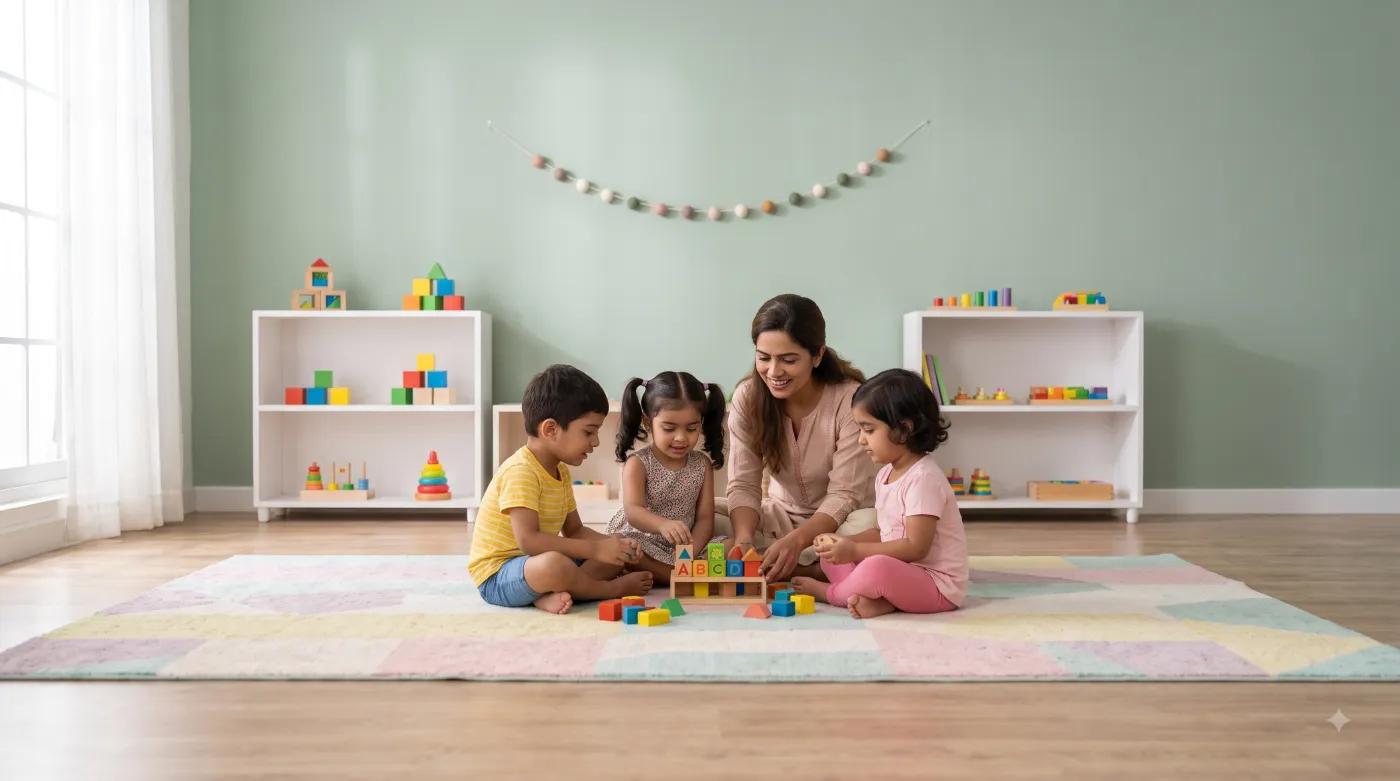
Two curricula dominate parental preference in Kavali: Montessori and Playway. The Montessori method appeals to families who value self-directed learning, sensorial exploration, and structured classroom materials. Parents often choose Montessori for its emphasis on independence and fine motor development during the critical 2 to 6 age window. Playway, on the other hand, focuses on activity-based learning through games, music, storytelling, and group interaction. This approach resonates with working parents who want their children to develop social skills and communication early.
- Montessori programs typically use mixed-age groupings, encouraging peer learning and mentorship.
- Playway methods emphasize outdoor play, creative expression, and emotional development.
- Both frameworks prioritize child-led discovery over rote instruction, which aligns with modern pedagogical research.
Parents in Kavali appreciate that local preschools offer flexibility in duration, with half-day, full-day, and daycare extensions available depending on household schedules.
Neighborhood & Campus Infrastructure
The 20 indexed preschools are spread across Kavali's key residential and commercial pockets. Rama Murthy Peta hosts several established centers, many operating from independent buildings with dedicated outdoor areas. Vengalarao Nagar features newer campuses with modern infrastructure, including digital learning corners and air-conditioned activity rooms. Christian Peta and Chinna Pattapu Palem offer mid-range facilities catering to middle-income families, while Kottapalli includes smaller community-based playschools.
- Fee bands generally range from ₹2,500 to ₹7,000 per month, depending on curriculum, hours, and amenities.
- Reputed Montessori centers in prime areas tend to charge on the higher end, reflecting teacher training costs and imported materials.
- Most campuses include child-safe furniture, age-appropriate washrooms, and outdoor play zones.
- Classroom capacity typically ranges from 15 to 25 children per session, keeping learning groups manageable.
Parents should visit campuses during operational hours to observe teacher-child dynamics, sanitation protocols, and the overall learning environment before finalizing admission.
Safety & Operational Verification
Every indexed center in Kavali undergoes a structured evaluation process covering three primary safety domains. First, CCTV monitoring is reviewed for coverage of classrooms, entry points, and play areas. Centers with full campus surveillance score higher and provide parents with transparent access protocols. Second, caregiver-to-child ratios are assessed. The recommended benchmark is 1:10 for children aged 2 to 3 and 1:15 for ages 3 to 6, ensuring individual attention and supervision.
- Hygiene standards include daily sanitization, clean drinking water systems, and monitored meal preparation areas.
- Fire safety equipment, first-aid kits, and emergency contact protocols are mandatory evaluation checkpoints.
- Background verification of staff and visitor management systems are reviewed during annual audits.
The 88 out of 100 average score reflects consistent compliance across these parameters. Parents are encouraged to request the latest evaluation summary and ask about grievance redressal mechanisms before enrollment. Choosing a preschool is a long-term commitment, and Kavali's indexed centers provide enough transparency for families to make informed, confident decisions.