South Delhi parents can choose from 40 indexed preschools and daycares, with an average evaluation score of 88/100. This is a strong overall result, but the score belongs to the full group and should not be treated as an individual center’s rating. Location, teaching approach, fees, opening hours, staff turnover, and daily care arrangements can differ considerably. Families should compare nearby options, speak with current parents, and check how each center communicates progress and daily activities before making a decision.
Pre-Primary Learning Frameworks in South Delhi
Montessori and Playway are the top curriculums in the 40-center index, reflecting their popularity among local parents. Montessori emphasizes purposeful independence, hands-on learning, self-choice, and carefully organized materials. Children usually move through activities at their own pace within a prepared classroom environment. This can support concentration, coordination, language development, and early confidence without relying heavily on competitive instruction.
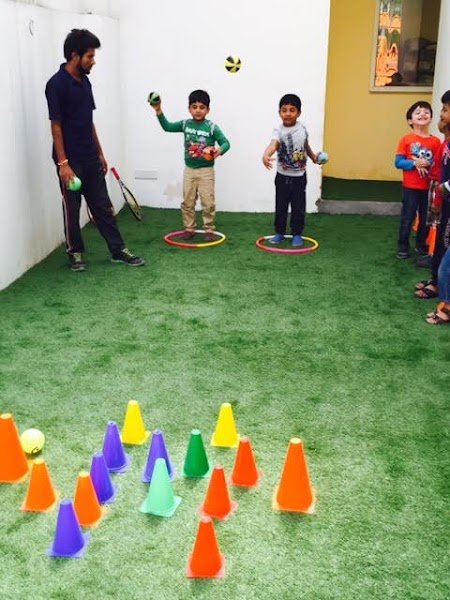
Playway uses play as the main method for early learning. Lessons may include stories, music, movement, art, building activities, sensory experiences, and supervised outdoor play. This approach can suit children who enjoy active exploration and social interaction. Parents should ask how much structured teaching is included and whether outdoor time, rest, toilet independence, and practical self-care skills are supported.
A good center visit should show the curriculum in practice. Look for a child-focused room, age-appropriate learning materials, and staff who observe children rather than simply move them from one activity to another. Ask how progress is recorded, how long children spend outdoors, and how children who need additional support are identified.
Neighborhood & Campus Infrastructure
The indexed centers are spread across North Hub, South Hub, East Zone, and West Zone. Parents should compare travel time as well as the neighborhood name, especially for children with long commutes. A center close to home may offer easier daily drop-off, while another farther away may provide a stronger curriculum, larger grounds, or more flexible hours.
Campus conditions should be checked directly. Indoor spaces should be bright, ventilated, clean, and arranged for children of different ages. Outdoor areas should be secure, shaded, and equipped for physical play. Ask whether classrooms have separate sanitation and hand-washing arrangements, safe drinking water, age-appropriate toilets, and enough room for children to rest.
Fee bands vary with curriculum, hours, meals, transportation, and the number of staff assigned to each child. Compare centers within similar bands, but review the full fee schedule. Clarify registration charges, security deposits, admission fees, annual increases, transport costs, meal plans, and refund terms. Extra services such as extended care, weekend programs, and holiday camps may be billed separately.
Safety & Operational Verification
Centers should be evaluated on practical safety and operating standards. Confirm whether CCTV cameras cover entry points, corridors, classrooms, and outdoor areas, and ask how recordings are monitored and retained. The entrance should have a controlled visitor process, and staff should maintain accurate child pick-up records. Ask to see the center’s safeguarding, emergency, and medical procedures.
Caregiver ratios determine how well staff can supervise and respond to individual children. Parents should be told the exact ratio for their