In Bharuch, parents have access to 55 well‑reviewed preschools and daycares, all of which have earned an impressive average evaluation score of 88 out of 100. This score reflects a strong overall standard across the city, giving parents confidence that the majority of institutions meet high expectations for teaching quality, environment, and safety.
Pre-Primary Learning Frameworks in Bharuch
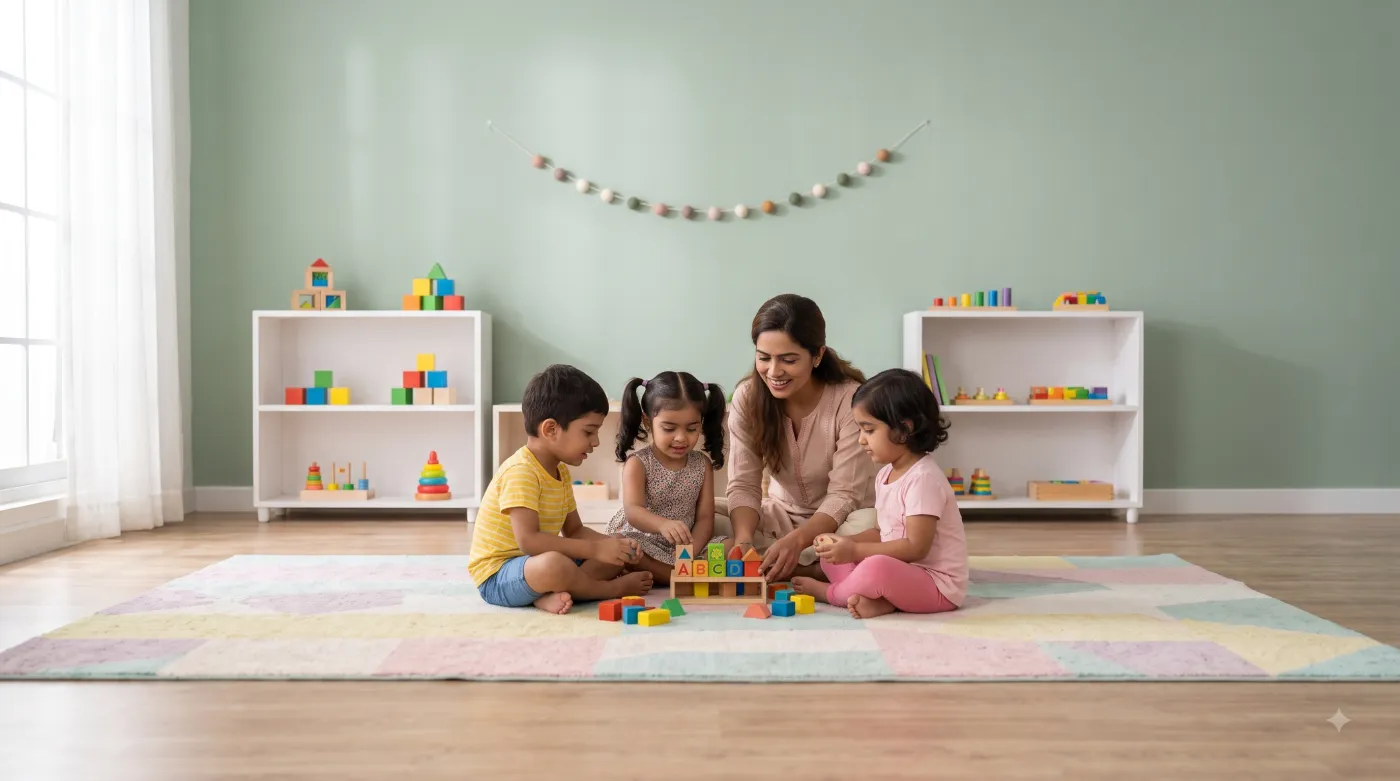
Montessori and Playway are the two most common curricula found in Bharuch’s early childhood schools. Parents favor Montessori because it encourages self‑directed play, hands‑on learning, and the development of fine motor skills through carefully designed materials. The Playway approach, meanwhile, blends guided play with structured activities that promote social interaction and problem‑solving. Both frameworks help children build confidence, independence, and a love of learning before they reach formal schooling. In practice, many centers combine elements of each, allowing teachers to tailor lessons to individual interests while keeping a clear developmental focus.
Neighborhood & Campus Infrastructure
Preschool locations are spread across the main residential areas of Kantiyajal, Vagra, Kavi, Mangrol, and Rohit village. Each neighborhood hosts a mix of small, family‑run centers and larger, multi‑campus institutions. Fees vary by district and facility size, with most centers charging between ₹3,000 and ₹7,000 per month. Facilities typically include indoor play areas, age‑appropriate classrooms, a small garden or outdoor play space, and a kitchen for snack time. Centers in Kantiyajal and Vagra often feature newer buildings with upgraded classroom lighting, while those in Mangrol and Rohit village tend to have more traditional layouts. Across the board, parents should look for clean, well‑lit rooms, age‑appropriate furniture, and a dedicated space for quiet activities.
Safety & Operational Verification
Every institution in the city’s directory is evaluated on a set of key safety and operational criteria. CCTV coverage is mandatory in all indoor areas and near entrances to provide real‑time monitoring. Caregiver ratios are carefully measured; most centers maintain a 1:12 ratio for children under five and a 1:15 ratio for older toddlers, ensuring that each child receives adequate attention. Hygiene standards are assessed through regular checks of classroom cleanliness, hand‑washing stations, and the condition of toys and learning materials. Centers that pass these checks are awarded a verification badge, which is displayed on their website and in marketing materials. Parents can also request a visit to observe the environment and discuss policies with staff directly.