Kalaburagi hosts a growing network of 63 indexed preschool and daycare centers, reflecting a strong emphasis on early childhood education in the city. Recent reviews show an average evaluation score of 88 out of 100, indicating that most facilities meet high standards for teaching quality, safety, and parent satisfaction. Parents looking for a reliable start for their child’s education can rely on these metrics to guide their decision.
Pre-Primary Learning Frameworks in Kalaburagi
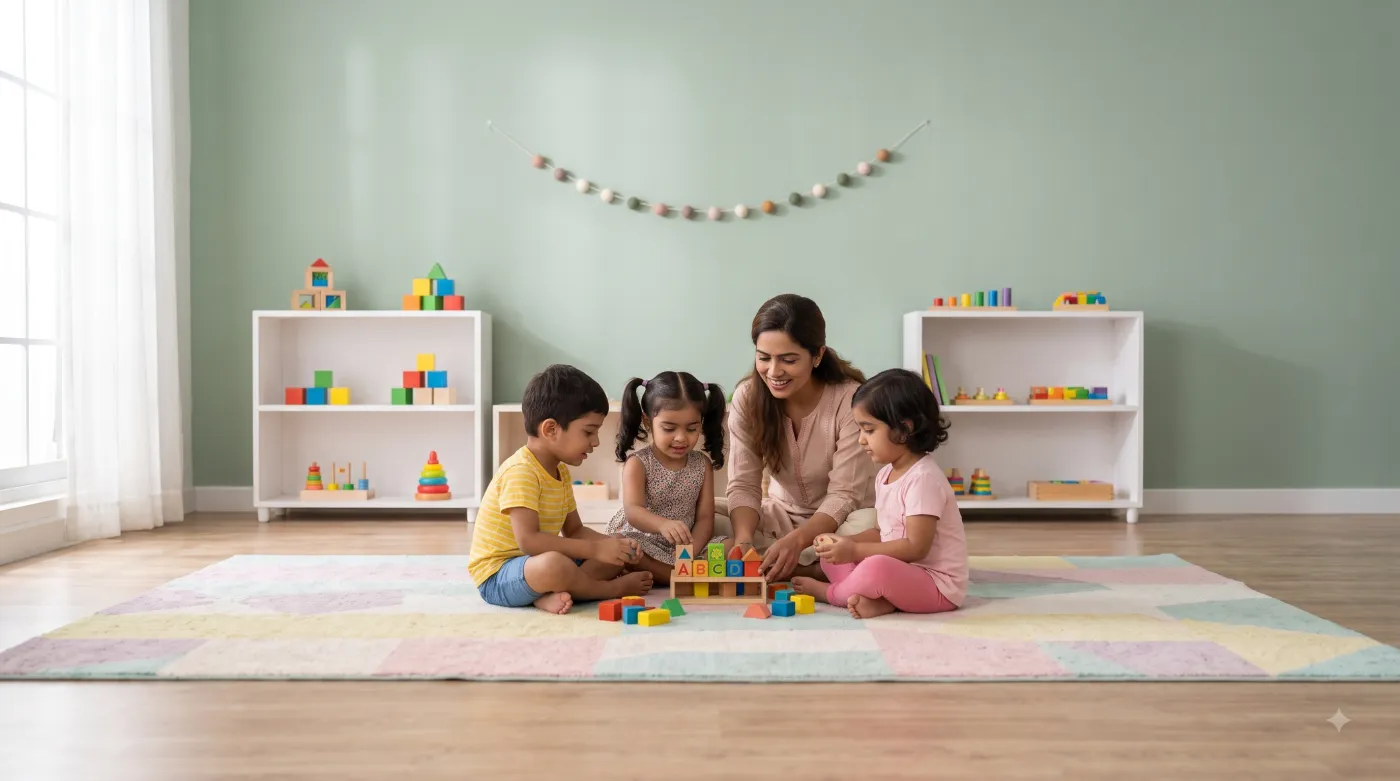
The two most common curricula among local preschools are Montessori and Playway. Montessori programs emphasize self‑directed activity, hands‑on learning, and collaborative play, which help children develop independence, problem‑solving skills, and fine motor control. Playway centers focus on guided play, storytelling, and sensory exploration, encouraging creativity and social interaction. Both approaches are favored by Kalaburagi parents because they provide structured yet flexible learning environments that respect each child’s pace and curiosity.
Neighborhood & Campus Infrastructure
Preschool locations are spread across five major neighborhoods: Godutai Nagar, Mudola, Firozabad, Malakheda, and Manura. Each area offers a mix of urban and semi‑urban settings, giving families options based on proximity and commute. Typical fee bands range from ₹4,000 to ₹12,000 per month, with variations tied to the curriculum type, facility size, and additional services such as breakfast or after‑school care.
- Godutai Nagar – Home to several Montessori centers with spacious outdoor play areas and indoor labs.
- Mudola – Known for Playway schools that incorporate local cultural activities and music.
- Firozabad – Features a mix of both curricula, many with modern classroom designs and solar lighting.
- Malakheda – Offers affordable options, often with shared facilities among neighboring centers.
- Manura – Hosts newer institutions that emphasize technology integration and parent‑teacher communication portals.
All centers maintain clean, well‑maintained premises, with indoor playrooms, age‑appropriate furniture, and dedicated learning zones. Most schools also provide a small cafeteria area for snacks and lunch, ensuring a balanced daily routine.
Safety & Operational Verification
Evaluation of each center looks at three key safety and operational factors: CCTV coverage, caregiver‑to‑child ratios, and hygiene protocols. Cameras are installed in common areas, entrances, and playgrounds, allowing parents to monitor the environment remotely. The recommended ratio of caregivers to children is 1:10 for toddlers and 1:12 for preschoolers; most Kalaburagi centers meet or exceed these guidelines.
Hygiene standards are verified through regular inspections that check hand‑washing stations, sanitization of toys, and the cleanliness of restrooms. Facilities that score high in these areas usually have separate spaces for diaper changing, a dedicated laundry schedule, and a strict no‑food‑outside policy to prevent cross‑contamination.
In addition to these checks, many schools conduct annual health screenings, provide first‑aid kits, and train staff in basic emergency response. Parents are encouraged to visit before enrolling, ask about the center’s safety policies, and review the most recent evaluation report to confirm that their chosen preschool meets Kalaburagi’s high standards.