Magadi, a developing town in the Ramanagara district of Karnataka, has witnessed a measurable expansion in its early education infrastructure. With 22 indexed preschool and daycare centers serving local families, the town reflects a steady shift toward structured pre-primary learning outside the home. The average evaluation score across Magadi stands at 88 out of 100, indicating that most operating centers meet solid benchmarks in teaching quality, infrastructure, and child welfare standards. Parents here are increasingly prioritizing early formative education, seeking institutions that balance academic readiness with social development. The presence of both established and emerging centers has created a competitive environment where facilities continuously improve to meet parental expectations.
Pre-Primary Learning Frameworks in Magadi
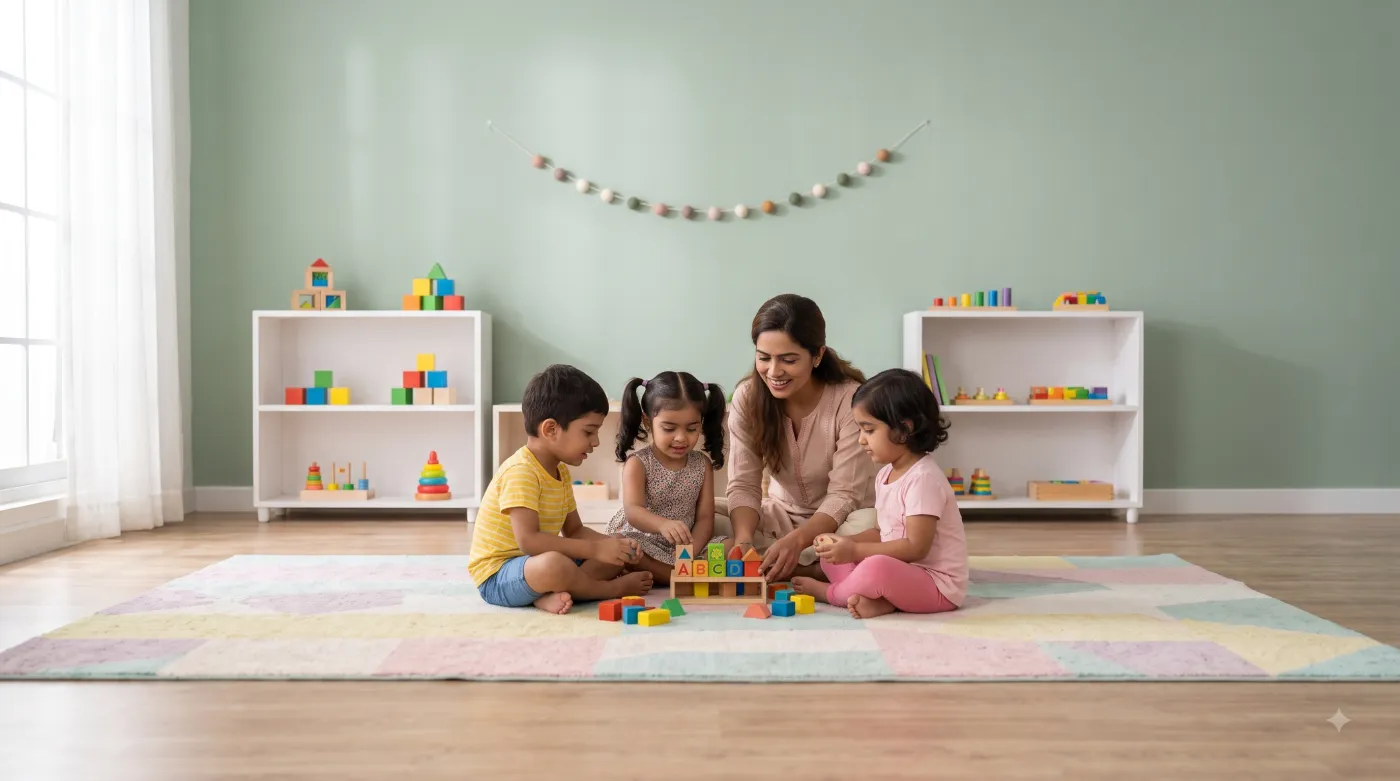
Montessori and Playway methodologies dominate the early education landscape in Magadi, and this preference is rooted in practical reasons. Montessori education emphasizes self-directed activity, hands-on learning, and collaborative play, which aligns well with the developmental needs of children aged two to six. Local parents appreciate that Montessori centers in the area focus on building independence, sensory awareness, and motor coordination through structured material-based learning. Playway, on the other hand, uses play as the primary medium for instruction, helping young children develop language, problem-solving, and interpersonal skills in an informal setting.
Both frameworks suit the typical Magadi household, where parents often seek an environment that does not impose rigid academics on toddlers but still prepares them for primary school entry. The dual emphasis on exploration and structured activity makes Montessori and Playway centers attractive for first-time learners transitioning from home environments.
Neighborhood & Campus Infrastructure
The distribution of preschools across Magadi follows a fairly even spread among three key zones: North Hub, South Hub, and East Zone. Each neighborhood hosts a mix of standalone preschools and daycare-cum-learning centers, giving families reasonable access regardless of where they reside within the town.
- North Hub serves families in the upper residential belt, where campuses tend to feature larger outdoor play areas and dedicated activity rooms.
- South Hub is a growing pocket with newer centers that often include daycare extensions and after-school support for working parents.
- East Zone offers a balanced mix of budget-friendly and mid-tier options, attracting families seeking accessible early education close to home.
Fee structures vary depending on infrastructure and curriculum depth. Entry-level programs begin around modest monthly rates suitable for average-income families, while premium Montessori setups with advanced learning materials and extended hours command higher fees. Most centers provide basic amenities such as child-safe furniture, age-appropriate learning aids, drinking water facilities, and clean washrooms. Higher-rated institutions often add features like dedicated reading corners, art stations, and outdoor sand or garden areas.
Safety & Operational Verification
Safety verification remains a central focus for preschool evaluation in Magadi. Centers are assessed on multiple operational parameters before receiving their indexed scores. CCTV surveillance in classrooms and entry-exit points is now standard across most recognized facilities, ensuring continuous monitoring of child movement and activity. Caregiver-to-child ratios are closely examined; well-rated centers maintain ratios appropriate to age groups, with younger children receiving more individualized attention.
Hygiene standards are evaluated through periodic checks of sanitation practices, food preparation areas (where meals are provided), and restroom maintenance. Staff background verification, including identity documentation and first-aid preparedness, also forms part of the assessment process. Centers scoring in the higher range, contributing to Magadi's 88 average, typically demonstrate consistent compliance with these operational benchmarks. Parents reviewing options are encouraged to visit campuses directly, observe a session, and ask about safety certifications before finalizing admission.