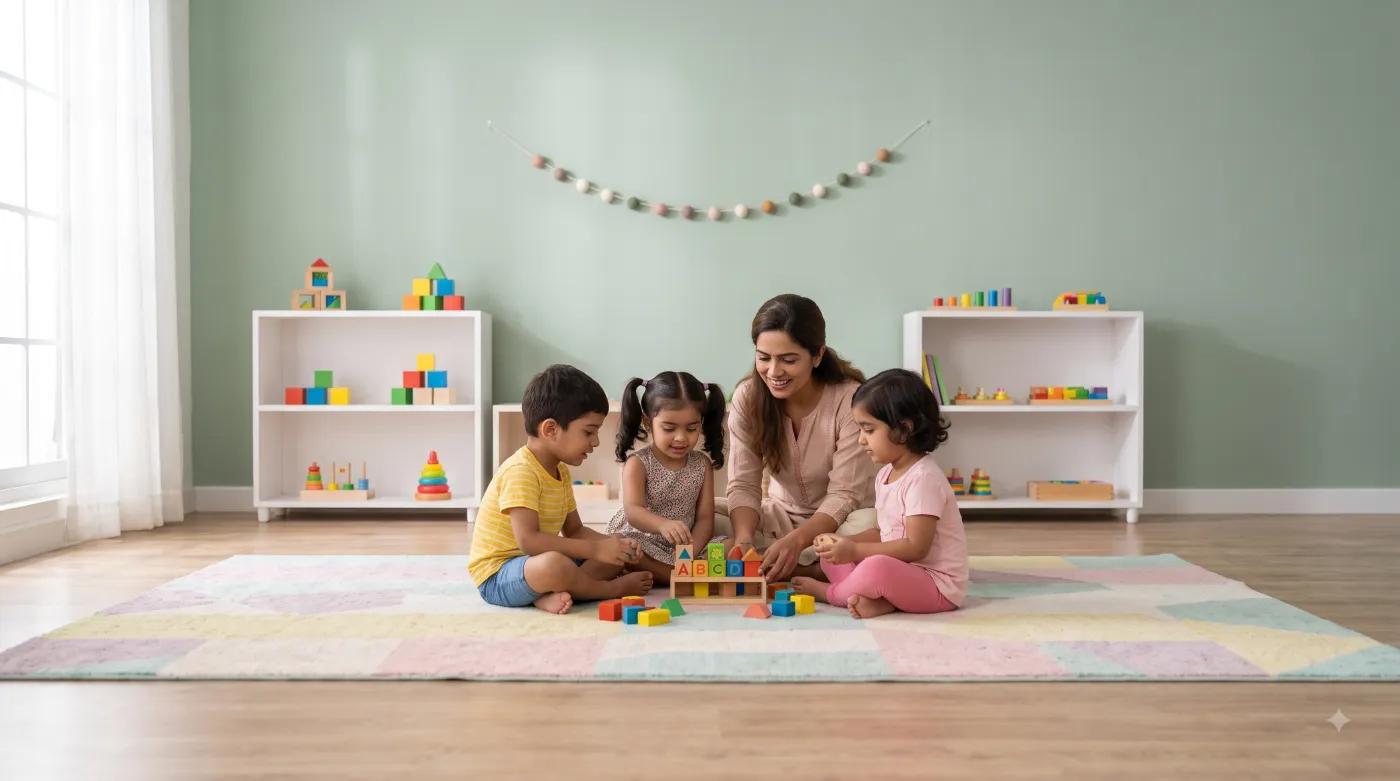
Lawngtlai has established itself as a growing hub for early childhood education in southern Mizoram, with 22 indexed preschool centers currently serving families across the district. The city's preschools have earned an average evaluation score of 88 out of 100, reflecting a commitment to quality care and structured early learning that meets or exceeds regional standards. Parents searching for nursery schools near Damdep or Sabualtlang will find a range of options that balance traditional childcare with developmentally appropriate curriculum designed for children between the ages of 2 and 6 years.
Pre-Primary Learning Frameworks in Lawngtlai
The two dominant teaching approaches in Lawngtlai preschools are Montessori and Playway methods, each offering distinct advantages for young learners during their most formative years.
Montessori education emphasizes self-directed activity, hands-on learning, and collaborative play. In Lawngtlai classrooms, children work at their own pace with specially designed materials that develop concentration, coordination, and a love for learning. This approach works particularly well for parents who want their children to build independence early and develop strong fine motor skills before entering formal schooling.
Playway methodology centers on learning through games, creative activities, and interactive sessions. Local preschools using this framework organize sensory activities, role-playing exercises, and group projects that help children develop social skills, emotional regulation, and basic cognitive abilities. For many families in Lawngtlai, this approach feels culturally familiar and developmentally sound for children transitioning from home care to a structured environment.
Both curriculums prioritize age-appropriate learning over academic acceleration, which aligns with early childhood development best practices recommended by education experts.
Neighborhood & Campus Infrastructure
Preschool facilities in Lawngtlai are concentrated primarily around two key neighborhoods: Damdep, which serves as a commercial and residential hub near the town center, and Sabualtlang, a rapidly developing area with newer residential complexes and growing demand for quality childcare options.
Campuses range from compact playgroup setups operating within community halls to purpose-built early learning centers with dedicated classrooms, outdoor play areas, and activity zones. Parents can generally expect the following infrastructure standards:
- Designated play zones with age-appropriate toys and learning materials
- Ventilated, well-lit classrooms sized for small group learning
- Basic outdoor spaces for physical activities and nature exploration
- Separate rest areas for younger children in nursery programs
- Clean sanitation facilities scaled for small children
Fee structures in Lawngtlai typically fall into accessible ranges compared to larger urban centers, with most nursery schools offering monthly programs that accommodate different family budgets. Parents are encouraged to visit campuses personally to assess whether facilities meet their child's specific needs.
Safety & Operational Verification
All indexed preschools in Lawngtlai undergo evaluation across several safety and operational categories. Security measures commonly include CCTV surveillance covering entry points and common areas, which provides parents with transparency about daily operations. Caregiver-to-child ratios are assessed to ensure that each classroom maintains adequate supervision—particularly important for playgroup and nursery-level children who require more individual attention.
Hygiene standards form another critical evaluation category. Centers are assessed on cleanliness protocols, food handling practices where meals are provided, and general maintenance of learning environments. Regular sanitization schedules and proper waste disposal systems indicate which preschools maintain health-conscious operations.
Before enrolling, parents should verify that their chosen preschool holds current operational permits and demonstrates consistent adherence to these safety benchmarks. Visiting during regular hours, speaking directly with caregivers, and observing classroom dynamics firsthand remain the most reliable methods for assessing whether a center will provide the safe, nurturing environment your child deserves.