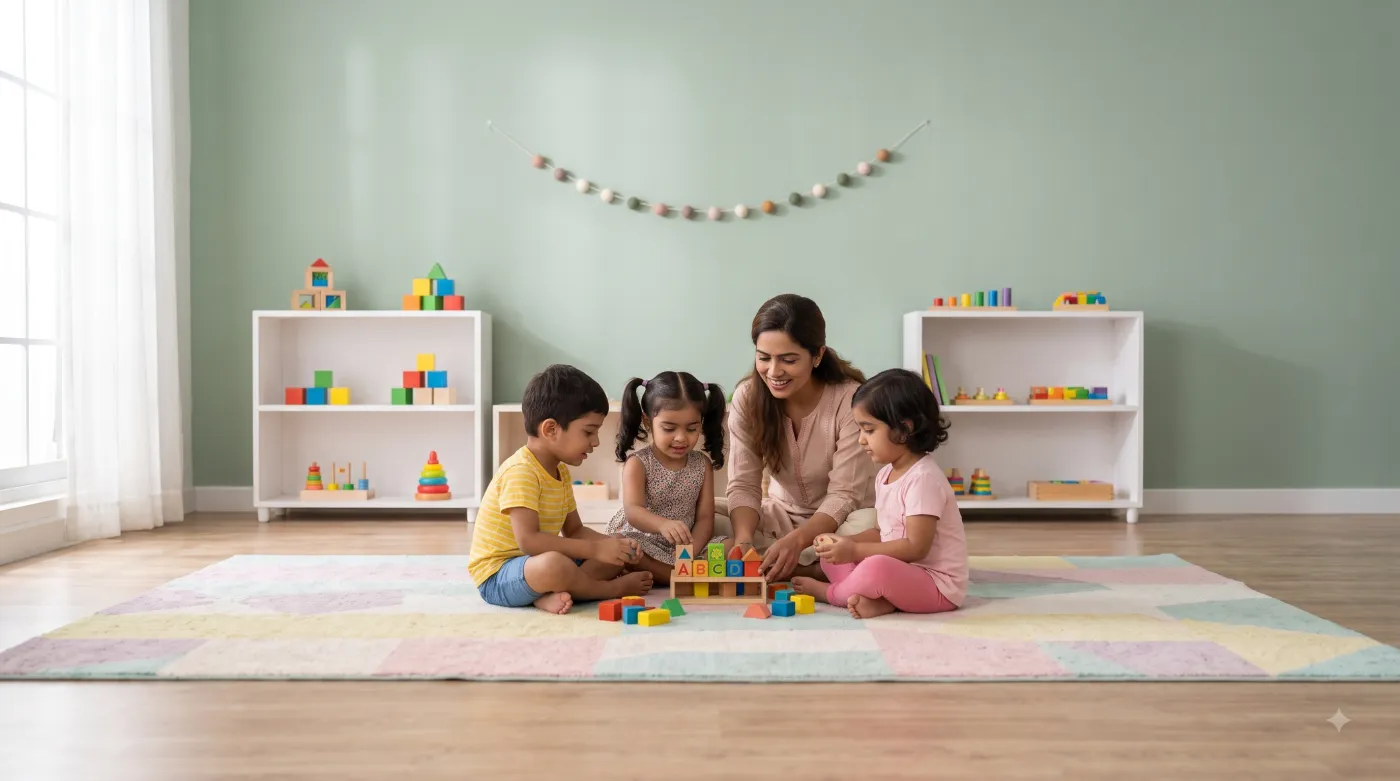
Early childhood education in Palanpur has grown into a well-structured segment with 17 indexed centers serving local families. These preschools maintain an average evaluation score of 88 out of 100, which signals consistent operational discipline and reasonable adherence to safety and pedagogical benchmarks. For parents in Palanpur, this score acts as a starting filter when shortlisting institutions for children between the ages of 18 months and 6 years. The presence of 17 verified centers indicates healthy availability, reducing the need for families to travel outside the city for quality pre-primary education. Most options fall under two dominant curriculum frameworks, both of which prioritize self-directed learning, sensory exploration, and structured play.
Pre-Primary Learning Frameworks in Palanpur
Montessori and Playway remain the top curriculums chosen by parents across Palanpur. Montessori programs in the city typically follow a child-paced model with mixed-age classrooms, manipulative learning materials, and trained directresses who guide rather than instruct. This approach appeals to families who want their children to develop independence, fine motor control, and early problem-solving skills. Playway methodology, by contrast, integrates academic readiness into activity-based sessions. Children engage with storytelling, music, art, role-play, and group games designed to build language, numeracy, and social-emotional competencies. Both frameworks align well with the developmental needs of toddlers and preschoolers, and most Palanpur centers offer a blend that accommodates different learning temperaments. Parents selecting between the two should observe a demo class, review the daily schedule, and ask how progress is documented through observation rather than formal testing.
Neighborhood & Campus Infrastructure
Preschool distribution across Palanpur is fairly even, with centers positioned in residential pockets to minimize commute time for families. Most campuses operate from independent buildings, bungalow conversions, or dedicated floors within larger complexes. Classroom sizes generally accommodate 15 to 25 children per session, segmented by age. Infrastructure standards in higher-rated centers include child-height furniture, dedicated outdoor play zones, activity rooms, reading corners, and clean sanitation facilities. Fee bands vary based on curriculum reputation, infrastructure quality, and inclusions such as meals, transport, and digital updates for parents. Mid-range programs tend to offer balanced facilities without premium pricing, while flagship Montessori setups may command higher fees due to imported learning materials and certified faculty. Parents are advised to inspect ventilation, drinking water arrangements, and emergency exits during campus visits.
Safety & Operational Verification
Centers indexed in Palanpur are evaluated on measurable safety and operational parameters that contribute to the 88 out of 100 average score. CCTV coverage in classrooms, entry-exit points, and play areas is a primary checkpoint. Caregiver-to-child ratios are reviewed to ensure adequate supervision, particularly for toddlers. Hygiene standards, including washroom cleanliness, diaper disposal protocols, and food preparation areas, form another critical evaluation layer. Staff verification, including background checks and first-aid readiness, is also assessed. Parents should request documentation of fire safety compliance, medical emergency procedures, and pickup authorization policies before enrollment. Transparent centers will share their evaluation summary, staff credentials, and parent testimonials without hesitation.