Introduction to Early Education in Valsad
Valsad, a developing city in southern Gujarat, has built a reliable network of 56 indexed preschools that serve families across urban and semi-rural pockets. The average evaluation score across these centers stands at 88 out of 100, indicating a strong operational baseline for parents who want structured early learning without traveling to larger metros. Most centers operate as standalone nurseries, private playschools, or recognized Montessori houses, and they cater to children between 18 months and 6 years. Admissions generally open between February and April each year, though several established campuses now offer rolling intakes based on seat availability. For working families, the presence of these centers within short driving distances reduces commute pressure significantly compared to districts where preschool density is lower.
Pre-Primary Learning Frameworks in Valsad
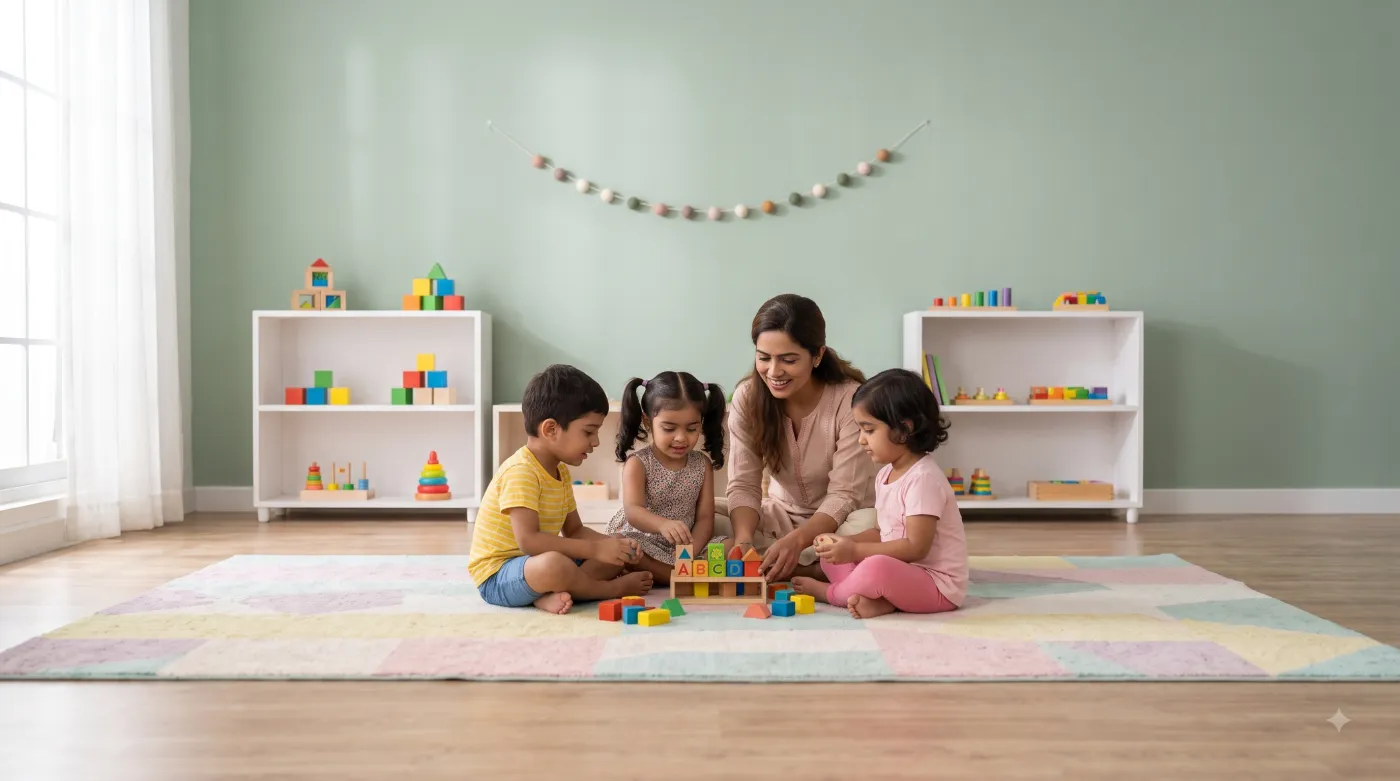
Montessori and Playway remain the two most requested curriculums among Valsad parents, and together they account for the majority of indexed centers in the district. Montessori programs follow a self-directed model where children choose activities from prepared shelves, developing fine motor control, sensory awareness, and early numeracy through tactile materials. This approach suits parents who want their child to build independence and concentration from a young age. Playway, on the other hand, integrates learning with structured play, music, storytelling, and group activities that target social skills and language development.
For families comparing the two, Montessori works best for children who focus deeply on individual tasks, while Playway supports extroverted learners who gain energy from peer interaction. A smaller segment of centers also offers activity-based or hybrid curricula that blend phonics, early math, and art into daily routines. When evaluating options, parents should ask how many hours per week each curriculum allocates to child-led exploration versus teacher-led instruction, as this ratio often reveals the actual classroom culture.
Neighborhood & Campus Infrastructure
Preschool distribution across Valsad varies by neighborhood. Tithal and Nanakvada hold the highest concentration of indexed centers due to their residential density and proximity to main transport routes. Nargol and Dharampur offer fewer options but feature campuses with larger outdoor play areas, which appeals to parents who prioritize open space. Chiol falls between these two profiles, with a balanced mix of small nurseries and mid-sized playschools. Fee bands across the district generally range from ₹1,200 to ₹3,500 per month, with premium Montessori setups and branded chains sitting at the higher end of that scale.
Facility standards in the top-scoring centers include dedicated activity rooms, reading corners, age-appropriate washrooms, and shaded outdoor zones. Mid-range schools often share a single building with tuitions or residential units, which can limit space for free play. Parents touring a center should check the student-to-classroom ratio, the availability of separate zones for under-3 and over-3 groups, and whether the campus has a proper emergency exit layout.
Safety & Operational Verification
Each indexed center in Valsad is scored on a 100-point evaluation framework that covers safety, staffing, and hygiene. CCTV coverage in classrooms and entry points carries significant weight, as does the presence of female caregivers trained in first aid and child CPR. Caregiver ratios typically should not exceed 1:12 for children above 3 years and 1:8 for toddlers, though the stronger centers maintain even lower ratios to support individualized attention.
Hygiene protocols include daily sanitization of toys, clean drinking water stations, and isolation areas for sick children. Operational checks verify valid fire extinguishers, secure boundary walls, and updated immunization records. The 88/100 district average reflects consistent compliance in these areas, but parents should still request a walkthrough during operational hours to confirm that documented standards match daily practice. A short conversation with existing parents often reveals more about staff consistency and communication than any brochure.