

HP8V+CP7, Maheshwar Society, Vijapur, Gujarat 384570, India
Asopalav Society, 19, Khed Tasiya Rd, near Digambar Jainwadi, Mahavirnagar, Himatnagar, Gujarat 383001, India
Ishwarkrpura Society, Vijapur, Gujarat 384570, India
Bodakdev School for Children Opp. WIAA Motor Driving School, Satya Marg, Bodakdev, Ahmedabad, Gujarat 380054, India
19, Ami Park, Dowlat Villas Palace Rd, opp. S.K. Bank, near Apurva Flats, Mahavirnagar, Himatnagar, Gujarat 383001, India
Get Free Printable Worksheets Delivered to Your Inbox
Age-tailored activities (Alphabets, Math, Coloring) & 10-minute child meal ideas. Preview samples
Mangalam Street, Nr. Apurva Flat, Dowlat Villas Palace Rd, Mahavirnagar, Himatnagar, Gujarat 383001, India
Parent Guide: Best Preschools & Daycares in Vijapur
Parent Guide: Best Preschools & Daycares in Vijapur
Vijapur, a developing town in Gujarat, now hosts 16 indexed pre-primary centers serving local families across its main residential pockets. With an average evaluation score of 88 out of 100, the early education landscape here reflects steady standards and growing parental awareness. Parents in Vijapur typically begin researching preschool options when their child is between 18 months and 2.5 years, and the town offers enough variety to support different learning philosophies without overwhelming families with excessive choices. The combination of reasonable fee structures, qualified teaching staff, and visible improvements in classroom facilities has positioned Vijapur as a practical destination for foundational education in the region.
Pre-Primary Learning Frameworks in Vijapur
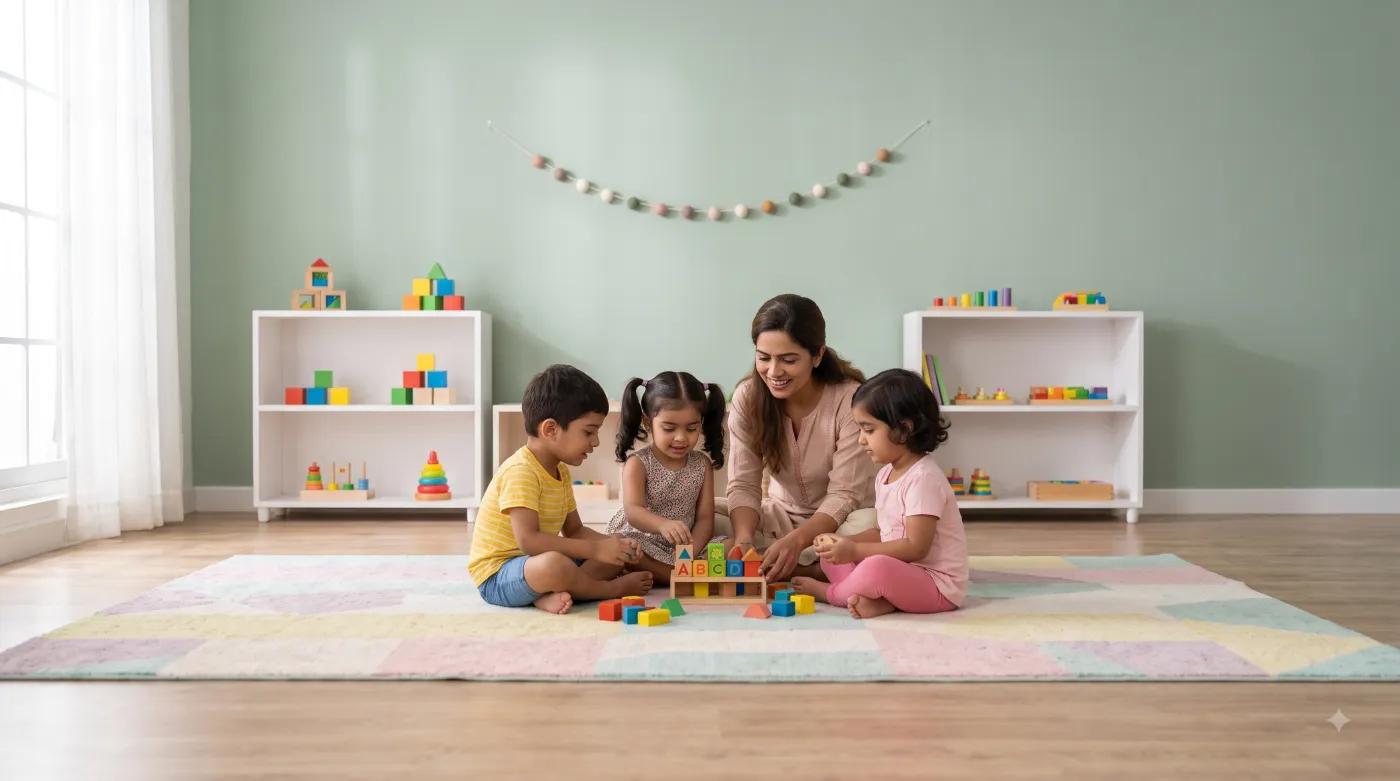
Montessori and Playway methods dominate the curriculum preferences among Vijapur parents, and for good reason. Montessori education emphasizes self-directed activity, hands-on learning materials, and mixed-age classrooms that encourage peer learning and independence. This approach suits families who want their children to develop concentration, motor refinement, and problem-solving skills from an early stage. Playway methodology, on the other hand, prioritizes learning through structured play, storytelling, music, and movement. It appeals to parents who believe social development and creative expression should drive early education.
Both frameworks align well with the developmental needs of children aged 2 to 6, and many centers in Vijapur blend elements from both systems. Parents should look for trained Montessori directresses or certified early childhood educators when evaluating a center, as the quality of implementation varies significantly. A genuine Montessori classroom will have accessible shelves, child-sized furniture, and uninterrupted work cycles, while a strong Playway program will include dedicated time for free play, group activities, and sensory exploration.
Neighborhood & Campus Infrastructure
The 16 indexed centers are distributed across four major neighborhoods: Central Zone, North Hub, East Zone, and West Zone. Central Zone tends to house more established institutions with longer operating histories, while North Hub has seen newer setups catering to growing residential developments. East Zone and West Zone offer a mix of standalone preschools and those attached to larger primary schools. This geographic spread means most families can find a quality center within a 10 to 15 minute commute, which matters when transporting young children twice daily.
Fee bands in Vijapur generally range from ₹1,800 to ₹4,500 per month, depending on the curriculum, infrastructure, and inclusion of meals or transport. Parents should ask about hidden costs such as activity fees, uniform charges, and annual development fees during the admission enquiry. Facility standards across the town are reasonably consistent, with most centers offering air-cooled or air-conditioned classrooms, outdoor play areas, and dedicated activity rooms. When visiting a campus, check the condition of washrooms, drinking water access, and whether play equipment is age-appropriate and well-maintained.
Safety & Operational Verification
Every indexed center in Vijapur is evaluated against specific operational benchmarks before being listed. CCTV coverage in classrooms and entry points, background-verified staff, and strict caregiver-to-child ratios form the baseline requirements. For toddlers aged 1.5 to 3 years, the ideal ratio is 1:10, and for children aged 3 to 6 years, it should not exceed 1:15. Parents should confirm these ratios during their visit rather than relying on brochures alone.
Hygiene standards include regular sanitization of toys, clean washrooms, safe drinking water, and proper food handling if meals are provided. Fire safety equipment, first-aid trained staff, and clear emergency protocols are additional checkpoints that distinguish responsible centers from the rest. Parents retain the right to ask for documentation of safety audits and staff credentials before finalizing admission. A center that welcomes transparency on these matters is usually one that maintains high daily standards.