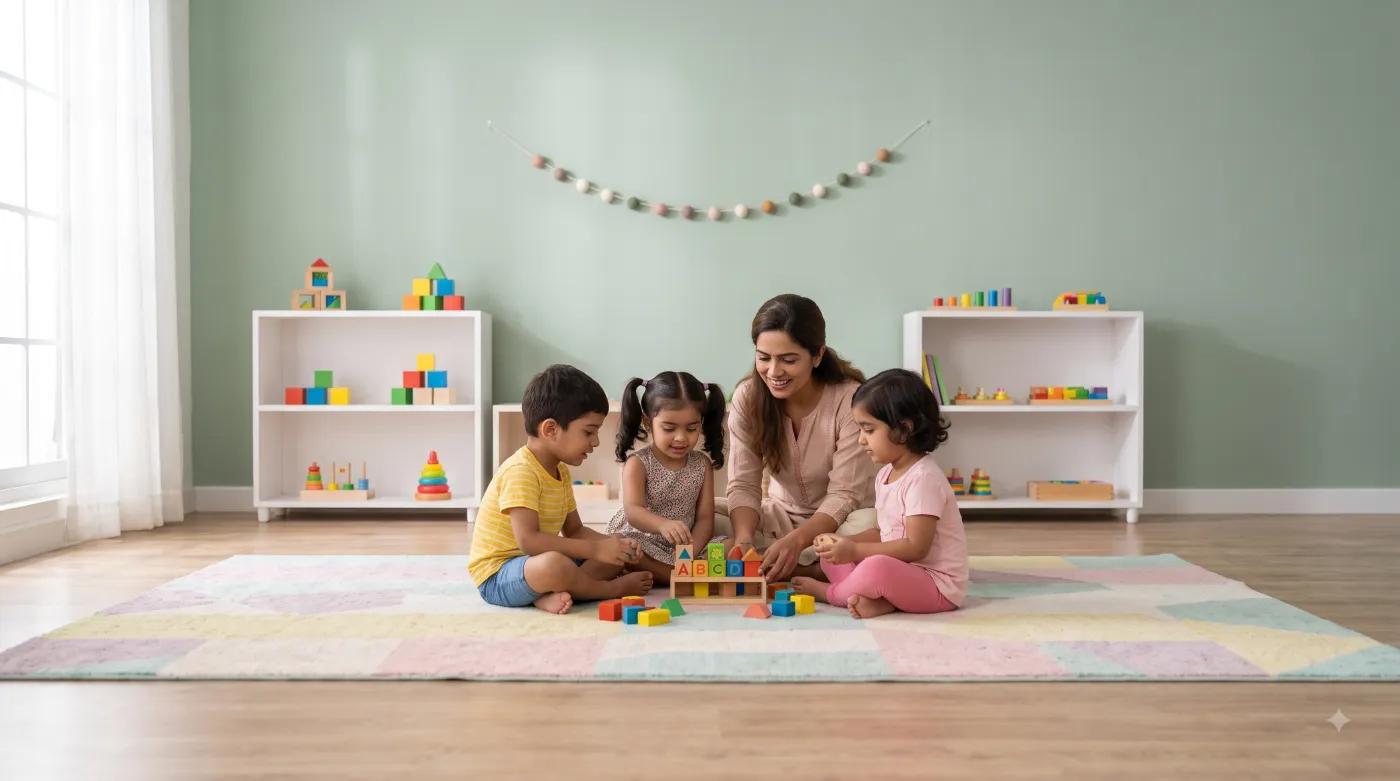
Jamshedpur’s early‑education market is growing steadily, with 29 indexed preschools and daycares serving families across the city. An average evaluation score of 88 out of 100 indicates that most centers meet high standards in teaching quality, safety, and parent satisfaction. Parents can expect a mix of well‑established institutions and newer ventures, all competing to provide reliable pre‑primary care. This guide breaks down the most common learning approaches, how centers are spread across key neighborhoods, and what safety checks you should look for before enrolling your child.
Pre‑Primary Learning Frameworks in Jamshedpur
Montessori and Playway dominate the curriculum choices for local families. Both methods focus on hands‑on learning, but they differ in structure and daily rhythm.
- Montessori encourages self‑directed activity, allowing children to choose tasks that match their developmental stage. The environment is set up with materials that promote independence, fine‑motor skills, and logical thinking.
- Playway blends guided play with thematic projects. It emphasizes social interaction, language development, and creative expression through story‑telling, music, and movement.
Parents appreciate these approaches because they move away from rote memorization and instead build confidence, problem‑solving ability, and a love of learning. In Jamshedpur, many centers combine the two, offering Montessori‑style workstations alongside Playway‑style group activities, giving children a balanced day that nurtures both individual and collaborative skills.
Neighborhood & Campus Infrastructure
Preschools are evenly distributed across the city’s main zones, making it easier for families to find a convenient location.
- Central Zone – Highest concentration of premium centers; facilities often include air‑conditioned classrooms, indoor play areas, and dedicated art studios.
- West Zone – Mix of mid‑range and budget‑friendly options; many schools operate in shared community spaces with basic playgrounds.
- North Hub – Growing cluster of new establishments; many feature modern design, large windows for natural light, and parent‑pickup zones.
- South Hub – Predominantly established centers with long‑standing reputations; often have larger outdoor fields and transport services.
Fee bands typically fall into three categories:
- Premium: ₹8,000–₹12,000 per month – includes extended hours, meals, and extracurricular clubs.
- Mid‑range: ₹5,000–₹7,500 per month – standard curriculum, basic meals, and limited after‑care.
- Budget: ₹3,000–₹4,500 per month – core classroom time, no meals, and limited extracurriculars.
Across all zones, most centers meet minimum infrastructure standards: clean, well‑ventilated classrooms, child‑sized furniture, safe play equipment, and a separate area for meals. When touring a campus, look for clear signage, organized storage, and a welcoming reception area.
Safety & Operational Verification
Safety checks are a major part of the evaluation score. Here’s what the rating system examines:
- CCTV coverage – Continuous video monitoring in entry points, classrooms, and play zones; recordings are retained for at least 30 days.
- Caregiver‑to‑child ratios – Minimum 1:5 for infants, 1:8 for toddlers, and 1:12 for preschoolers, ensuring adequate supervision.
- <