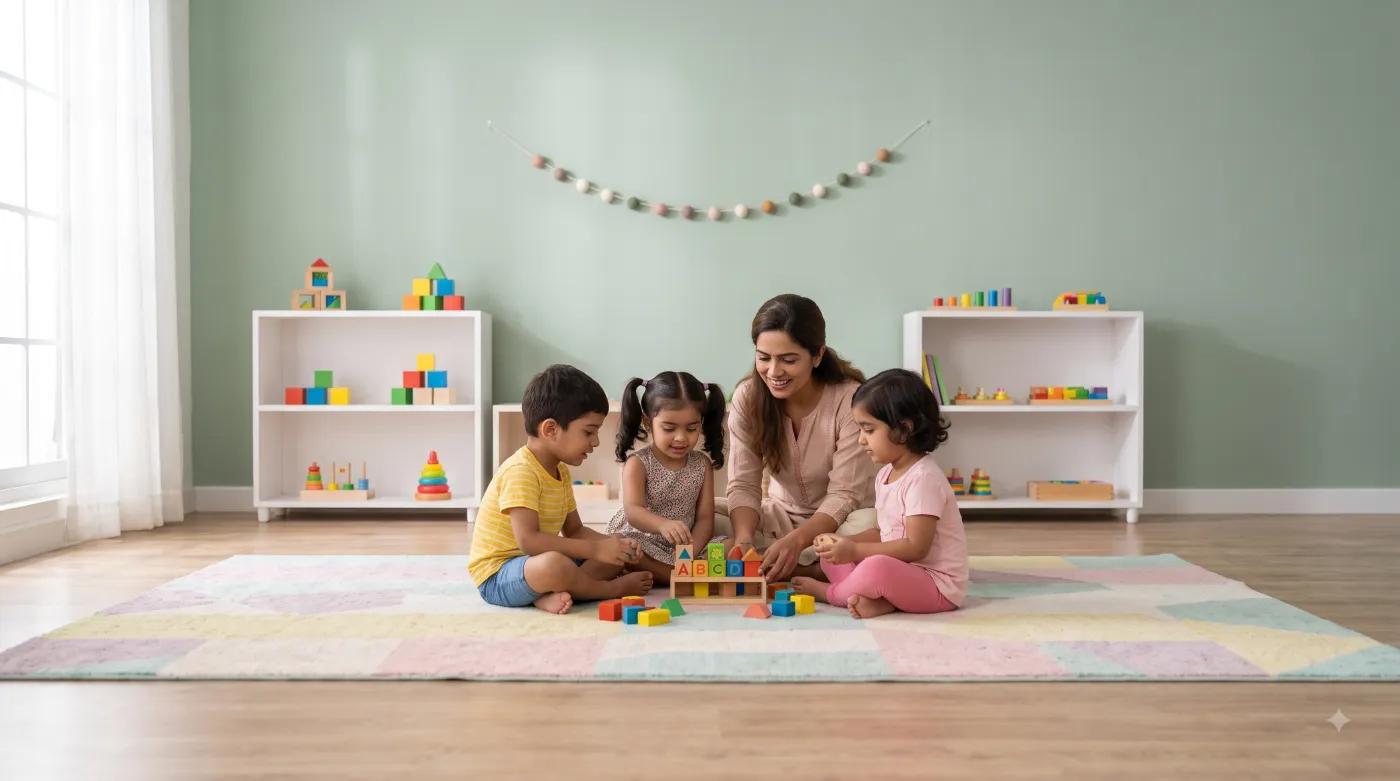
Doddathoguru, a growing suburb of Bengaluru in Karnataka, hosts two indexed early‑education centers. Both centers have earned an average evaluation score of 88 out of 100, indicating strong performance in teaching quality, safety, and overall child development. Parents in this area benefit from a compact market that still offers a solid range of options, especially the well‑known Montessori and Playway programs.
Pre‑Primary Learning Frameworks in Doddathoguru
Montessori and Playway dominate the local preschool scene because they match the expectations of Karnataka families for hands‑on, child‑centered learning. Montessori classrooms emphasize self‑directed activity, allowing children to choose tasks that match their developmental stage. This approach builds concentration, fine‑motor skills, and an early sense of responsibility.
Playway, on the other hand, blends structured play with guided discovery. Teachers use themed modules—such as “little scientists” or “mini architects”—to weave basic literacy and numeracy concepts into everyday play. The result is a learning environment where curiosity is rewarded and foundational academic skills are introduced without pressure.
Both curricula share a focus on social interaction, encouraging children to negotiate, share, and resolve conflicts. For parents, this translates into smoother transitions to primary school, as children already understand classroom routines and peer dynamics.
Neighborhood & Campus Infrastructure
All early‑education facilities in Doddathoguru are concentrated in the Electronic City corridor, a well‑connected hub with easy access to public transport and major roadways. The two indexed centers are positioned near the main commercial strip, making drop‑offs convenient for working parents.
- Fee bands: One center charges ₹7,500–₹9,000 per month, while the other ranges from ₹9,500–₹11,500, reflecting differences in class size, extra‑curricular offerings, and indoor‑outdoor space.
- Facility standards: Both campuses meet Karnataka’s preschool licensing requirements. Classrooms are air‑conditioned, equipped with child‑size furniture, and feature dedicated art and reading corners. Outdoor areas include secure play yards, sand pits, and age‑appropriate climbing structures.
- Transport options: Each center runs a limited‑capacity shuttle that follows a fixed route through Electronic City, reducing the need for parents to arrange private pickups.
The proximity of the centers to residential complexes and tech parks means that most families can choose a location that aligns with their daily commute, cutting down travel time and stress.
Safety & Operational Verification
Safety checks form a core part of the evaluation process that produced the 88/100 score. Both centers are required to maintain continuous CCTV coverage in all indoor and outdoor zones. Recorded footage is stored for at least 30 days and can be reviewed by parents upon request.
Caregiver‑to‑child ratios comply with state guidelines: 1:6 for children aged 2–3 and 1:8 for ages 3–5. Staff members hold early‑childhood education diplomas and undergo background checks annually. Ongoing professional development is tracked, ensuring teachers stay current with the latest pedagogical methods.
Hygiene standards are audited monthly. Each classroom has hand‑washing stations at child height, and surfaces are sanitized three times a day. The centers also follow a strict sick‑child policy, requiring a medical clearance before a child returns after illness.
Parents can verify these measures by requesting the latest safety audit report, which most centers provide as a PDF on their website or at the front desk. Transparent reporting builds trust and gives families confidence that their children are learning in a secure, well‑managed environment.