

Lingasgur road, PO Mudgal, Tq Lingsgur, Mudgal, Karnataka 584125, India
Mudgal, Karnataka 584125, India
Parent Guide: Best Preschools & Daycares in Mudgal
Parent Guide: Best Preschools & Daycares in Mudgal
Early Education Landscape in Mudgal
Mudgal, a quiet town in Karnataka's Raichur district, currently hosts 2 indexed preschools serving local families with pre-primary education. According to recent evaluations, these centers maintain an average quality score of 88/100, which reflects solid operational standards across the limited options available in the area. Parents in Mudgal seeking foundational learning for children between 2 and 6 years will find that the existing institutions focus primarily on two well-regarded pedagogical approaches. While the number of centers remains modest compared to larger cities, the quality benchmarks suggest that families do not need to compromise on care or curriculum when enrolling locally.
Pre-Primary Learning Frameworks in Mudgal
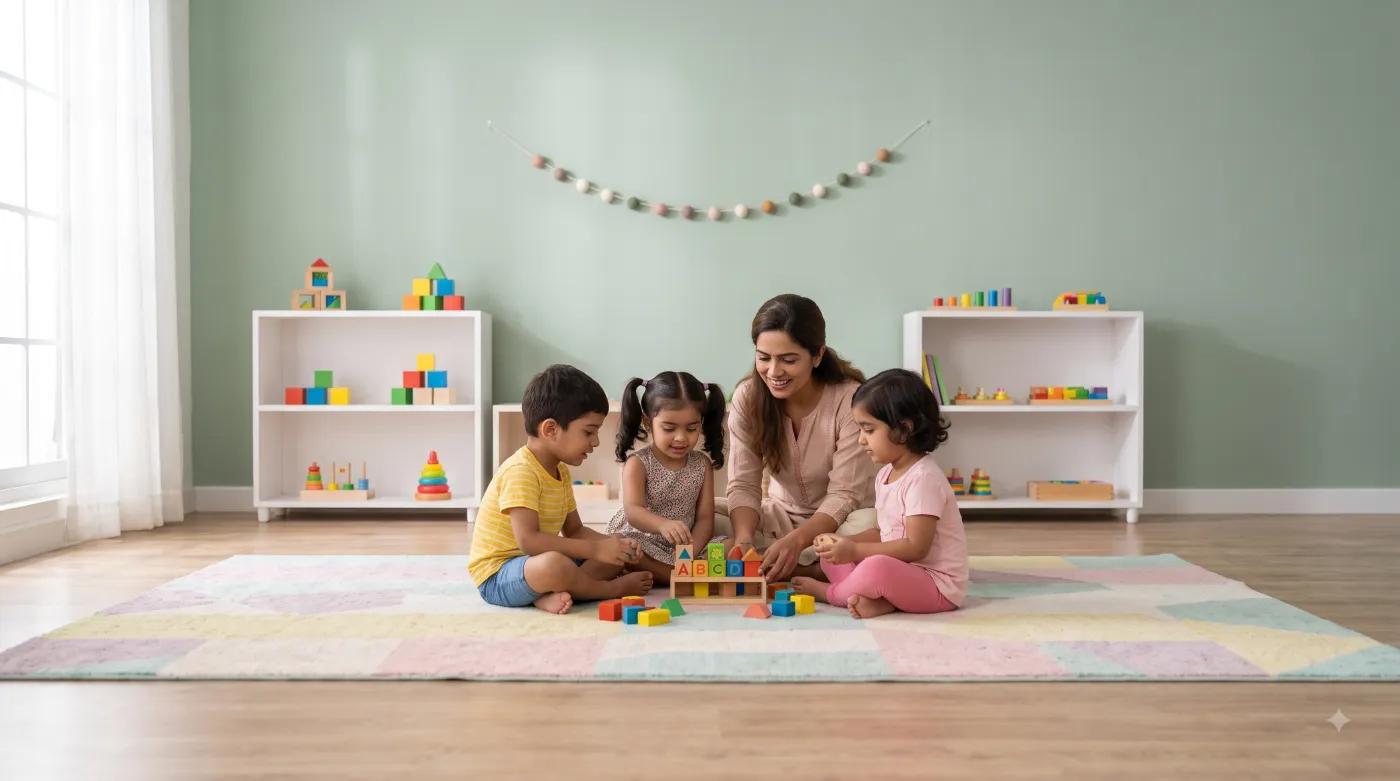
Montessori and Playway methods dominate the educational offerings in Mudgal, and there are practical reasons why these two frameworks appeal to parents in this region. Montessori education emphasizes self-directed activity, hands-on learning, and mixed-age classrooms where children develop independence and concentration at their own pace. The method uses specifically designed materials that help young learners grasp abstract concepts through concrete manipulation. For families in semi-urban Karnataka, this approach resonates because it nurtures problem-solving skills and self-discipline from an early age.
Playway methodology takes a complementary approach by integrating play-based learning with structured educational outcomes. Children engage with storytelling, music, art, and physical activities that build language skills, social confidence, and motor development simultaneously. Playway works particularly well for children transitioning from home environments to formal schooling, as the play-oriented atmosphere reduces anxiety while introducing foundational literacy and numeracy concepts. Both methodologies prepare children well for primary school admission, and Mudgal parents often choose between them based on whether their child responds better to structured exploration (Montessori) or activity-rich social learning (Playway).
Neighborhood and Campus Infrastructure
The 2 indexed preschools in Mudgal are distributed across two primary neighborhoods: Tq Lingsgur and Hanchinala. This geographic spread ensures that families from different parts of the town have reasonable access to early education facilities without requiring long commutes with young children. Both areas maintain a semi-urban character, and preschools operating here typically occupy converted residential buildings or purpose-built small campuses with basic but adequate infrastructure.
Fee structures in Mudgal remain more affordable than metropolitan Karnataka, which is an important consideration for local families whose income sources are largely tied to agriculture and small-scale trade. Parents can generally expect monthly tuition ranges that are considerably lower than Bangalore or Hyderabad fees, though exact costs vary by facility, hours, and included services. Common facility standards across the indexed centers include child-friendly furniture, dedicated activity zones, outdoor play areas (where space permits), and basic learning materials aligned with the respective curricula. When evaluating options, parents should visit both campuses to assess classroom hygiene, teacher interaction styles, and the availability of age-appropriate learning resources.
Safety and Operational Verification
Preschools in Mudgal undergo systematic evaluation covering critical safety and operational parameters. The 88/100 average score reflects consistent performance in three core areas: CCTV surveillance, caregiver-to-child ratios, and hygiene protocols. CCTV monitoring allows parents and administrators to maintain visual oversight of classrooms and entry points, reducing security concerns. Caregiver ratios are assessed to ensure that individual children receive adequate attention, with standards typically requiring higher adult-to-child ratios for younger age groups. Hygiene evaluations cover classroom cleanliness, sanitization of toys and surfaces, drinking water safety, and toilet facilities. Parents should request current evaluation reports and ask about emergency procedures, staff qualifications, and daily health screening practices before finalizing admission.