Mumbai's early childhood education landscape offers parents more than 600 indexed preschools and daycare centers across the metropolitan area, with an average evaluation score of 88 out of 100. This score reflects the city's commitment to structured early learning, though quality varies significantly between neighborhoods. For parents navigating this vast network of options, understanding curriculum choices, facility standards, and safety protocols helps narrow down choices that align with their child's developmental needs and family budget.
Pre-Primary Learning Frameworks in Mumbai
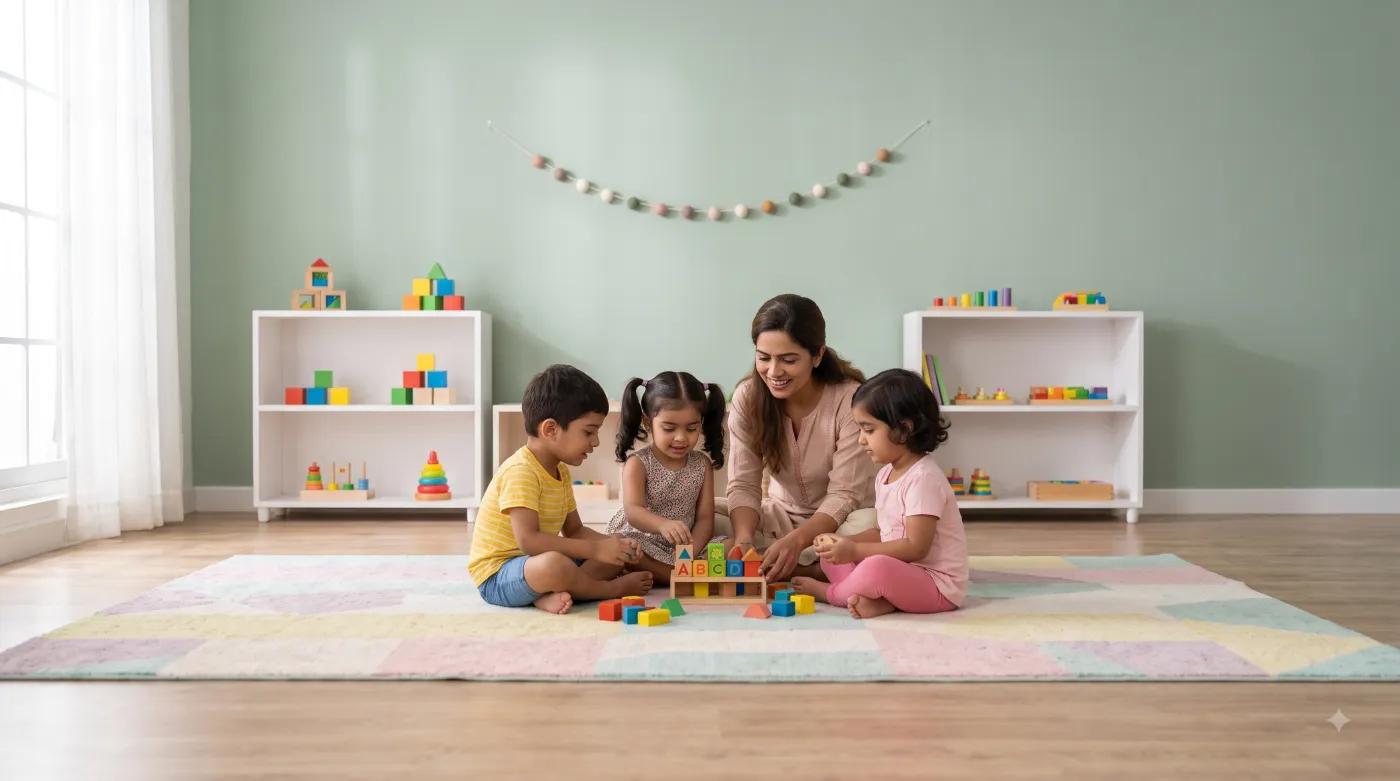
Montessori and Playway approaches dominate Mumbai's preschool scene, each appealing to different parenting philosophies. Montessori classrooms emphasize self-directed activity with specially designed materials, allowing children to progress at their own pace. This appeals to parents seeking hands-on learning environments where their children develop concentration and independence through practical life exercises like pouring, sorting, and dressing frames. Many Mumbai Montessori centers incorporate Indian cultural elements alongside traditional materials, creating environments that feel familiar yet globally informed.
Playway methodology suits parents who prioritize social interaction and experiential learning through games, songs, and collaborative activities. This approach works particularly well for younger toddlers adjusting to group settings, as the curriculum adapts activities to developmental stages rather than rigid academic timelines. Mumbai parents often choose Playway preschools for their emphasis on language development, motor skills, and emotional regulation through play-based routines. Both frameworks share common ground in recognizing that children under six learn best through sensory experiences and meaningful contexts rather than abstract instruction.
Neighborhood & Campus Infrastructure
Preschool distribution across Mumbai reflects the city's economic diversity. Bandra and Juhu host premium early education centers with spacious campuses, dedicated outdoor play areas, and comprehensive facilities including libraries, music rooms, and activity zones. These neighborhoods command higher fees, typically ranging from ₹8,000 to ₹25,000 per month, but parents in these areas expect modern infrastructure and lower child-to-teacher ratios. Andheri offers mid-range options with good facilities at moderate price points, making it popular among working families seeking quality without premium costs. Churchgate and Navjeevan Wadi areas provide more affordable alternatives, with fees often between ₹3,000 and ₹8,000 monthly, while maintaining adequate standards for early childhood development.
Campus standards vary considerably across these neighborhoods. Newer centers incorporate air purification systems, UV-sanitized play materials, and dedicated nap rooms with individual cots. Older preschools in established buildings may offer smaller spaces but compensate with experienced staff and established community networks. Parents should visit during operational hours to assess actual classroom conditions rather than relying on photographs or marketing materials. Many centers in competitive neighborhoods like Bandra have upgraded facilities in recent years, while emerging areas continue improving infrastructure to meet rising parental expectations.
Safety & Operational Verification
Evaluating safety standards requires direct inquiry and site observation. Top-rated Mumbai preschools maintain CCTV coverage in all common areas including classrooms, play zones, and entry points, with footage accessible to authorized parents. Caregiver ratios represent a critical metric—the best centers maintain one teacher or caregiver for every eight to ten children in toddler classes, decreasing to one-to-fifteen for older preschool groups. These ratios directly impact individual attention and supervision quality during meals, outdoor play, and rest periods.
Hygiene protocols have become a priority following recent health concerns. Reputable centers implement daily sanitization routines, mandatory hand-washing schedules, and medical clearance requirements for staff and children. Kitchen facilities at centers offering meals should meet FSSAI standards with documented food handling certifications. Parents should verify emergency evacuation procedures, first-aid availability, and staff training in basic pediatric safety. Asking about background verification processes for caregivers provides additional confidence in operational standards. The 88-point average evaluation reflects these varying approaches—some centers excel across all dimensions while others meet minimum requirements without going further.