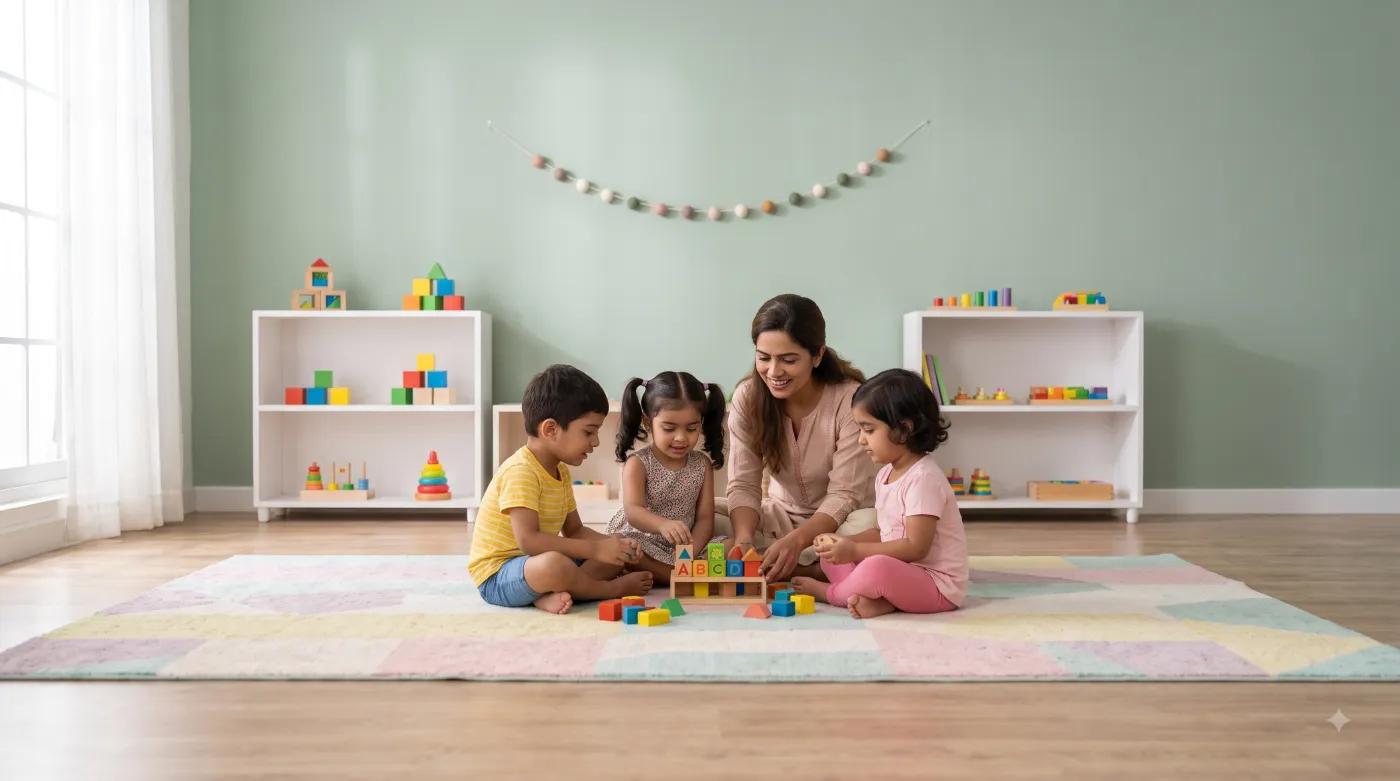
Satara's early education landscape features 35 indexed centers with an average evaluation score of 88/100, placing the district among the more dependable preschool markets in western Maharashtra. The district headquarters sits at the foothills of the Sahyadri range, and families here typically prioritize early childhood programs that combine structured academic readiness with the kind of flexible, exploratory learning suited to children between 18 months and 6 years. Parents in Satara are increasingly methodical in their search, often comparing centers side-by-side on classroom quality, teacher credentials, and daily routines before committing to admissions. The average score of 88 reflects a healthy baseline where most operational and pedagogical standards are met consistently, though meaningful variation still exists between individual campuses.
Pre-Primary Learning Frameworks in Satara
Montessori and Playway methods dominate parental preference across Satara, and for practical reasons. Montessori's self-directed material-based approach fits well with families who want their children to develop independence, fine motor control, and early numeracy and literacy skills at their own pace. The method's mixed-age grouping also gives older preschoolers a chance to mentor younger ones, which many local educators find produces calmer classrooms. Playway, by contrast, leans heavily on activity-based discovery, songs, art, and guided free play, making it a strong fit for toddlers adjusting to a structured environment for the first time. Both frameworks share a common advantage in Satara: they prepare children well for the transition into formal CBSE, ICSE, or Maharashtra State Board schools that begin at Class 1. Parents who want a stronger academic push in the final preschool year often lean toward Montessori for its phonic and math materials, while families seeking a gentler social-emotional introduction typically start with Playway.
Neighborhood & Campus Infrastructure
Preschool distribution in Satara is spread across five notable zones: Koynanagar, Helwak, Aundh, Khatav, and Mol. Koynanagar, being a planned township near the dam, tends to have more uniform facility standards, with classrooms built to similar specifications and predictable fee bands. Helwak and Mol, with their more semi-urban character, host a wider range of fee structures, from budget-friendly neighborhood schools to mid-tier institutions. Aundh in Satara district differs from its Pune namesake and functions primarily as a residential cluster with a few standalone preschools and home-based daycare centers. Khatav covers a larger geographical area, so families here often weigh commute times heavily. Monthly fees in the district typically range from roughly ₹2,500 to ₹7,500, depending on location, infrastructure, and curriculum. Higher-scoring centers almost always feature dedicated outdoor play zones, child-height furniture, and separate activity rooms for art, music, and pretend play.
Safety & Operational Verification
Centers across Satara are evaluated on a consistent checklist that includes CCTV coverage of classrooms and entry points, caregiver-to-child ratios aligned with age groups, and hygiene protocols covering washroom sanitation, drinking water quality, and mid-day meal handling. The 88/100 average indicates that CCTV monitoring and basic fire safety equipment are now standard across most indexed centers, though full compliance with pickup-verification protocols and staff background verification remains uneven. Parents should specifically ask whether the center maintains a documented visitor log, whether caregivers undergo periodic health checks, and how the school manages allergies or medical needs. Centers scoring in the 90-plus range generally have a written safety manual and conduct monthly evacuation drills, while those in the low 80s may still rely on informal routines. Requesting a copy of the most recent evaluation summary during your campus visit remains the most reliable way to compare operational standards before enrolling your child.