Karnataka’s Balvatika Programme Revamps Preschool Standards with New CCTV, NCPCR, and NEP‑2020 Alignments
EXECUTIVE SUMMARY & CONTEXT FOR PARENTS
Karnataka’s Department of School Education and Literacy (DSEL) has issued a comprehensive set of guidelines that reshape early childhood education (ECE) across the state, especially for the Balvatika programme that serves children aged three to six. The new directives, released in June 2024, integrate the National Education Policy 2020 (NEP‑2020) vision of well-rounded, play‑based learning, the National Commission for Protection of Child Rights (NCPCR) safety mandates, and specific requirements for preschool infrastructure, including mandatory CCTV surveillance in all classrooms and play areas. For parents, this means a clearer, more transparent admission timeline, enhanced safety protocols, and a curriculum that emphasizes cognitive, socio‑emotional, and physical development rather than rote learning. Admissions for the 2025‑26 academic year must now be completed by the end of August, with schools required to publish their compliance certificates on the DSEL portal (https://schooleducation.karnataka.gov.in/). The guidelines also stipulate that every Balvatika centre must adopt the “Early Learning Outcomes” framework prescribed by the Ministry of Women and Child Development (MWCD) and align its assessment methods with the CBSE and ICSE early‑learning benchmarks, even though the centres are state‑run. Parents can expect regular progress reports, digital attendance logs, and video‑verified safety checks, all accessible through a mobile‑friendly dashboard. The rollout includes a phased implementation: Phase 1 (July‑December 2024) focuses on teacher‑training and CCTV installation; Phase 2 (January‑June 2025) enforces curriculum alignment and NCPCR compliance audits. Failure to meet these deadlines could result in temporary suspension of admissions or loss of government funding. Overall, the policy aims to raise the quality of early education, safeguard children’s well‑being, and bring Karnataka’s preschool system in line with national standards.
KEY TAKEAWAYS FOR INDIAN PARENTS
- Clear Admission Calendar: Applications for Balvatika enrolment open on 1 May 2024 and close on 31 August 2024. Schools must confirm seats by 15 September 2024, giving parents ample time to plan transport and childcare arrangements.
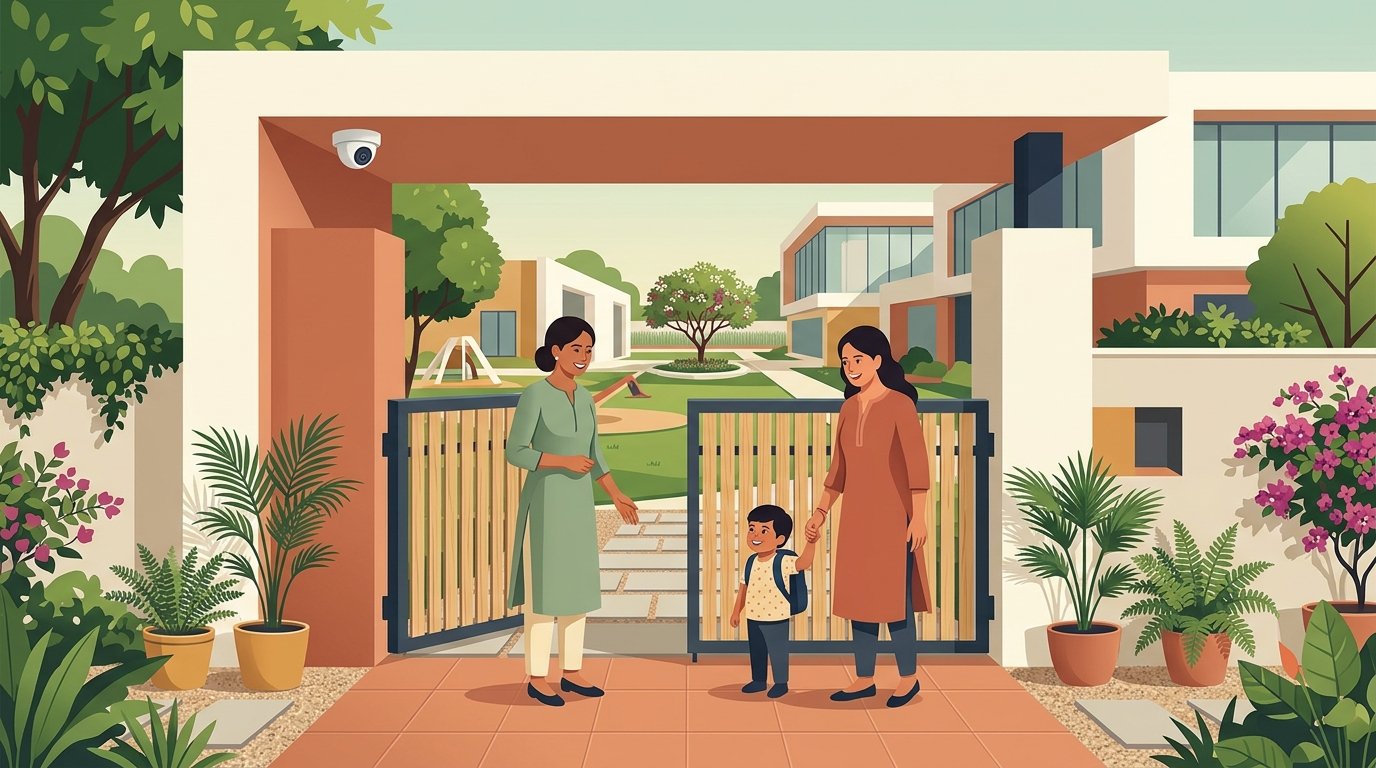
- Enhanced Safety via CCTV: Every classroom, outdoor play area, and entry‑exit point must be equipped with high‑definition CCTV that records 24/7. Footage will be stored for at least 30 days and is accessible to parents through a secure portal, ensuring real‑time monitoring and swift response to any incident.
- Curriculum Aligned with NEP‑2020: The Balvatika syllabus now follows the “Play‑Based Learning” model, incorporating language, numeracy, art, and life‑skills activities. Assessments are formative, focusing on developmental milestones rather than grades.
- Parental Involvement Portal: DSEL’s new digital dashboard lets parents view attendance, activity logs, and CCTV snapshots, and submit feedback directly to the school administration.
- Compliance Transparency: Each preschool must display its NCPCR safety compliance certificate and CCTV audit report on its website and at the school entrance, allowing parents to verify standards before enrolment.
NEP 2020 Foundational Stage Age Cutoffs (Session 2026–2027)
Official Ministry of Education & State Board milestone benchmarks. Child must turn required age by June 1st / July 31st.
📥 Download State NEP Age Cutoff PDF & Circular Summary
Get the official age matrix, relaxation rules, and state GR breakdown sent directly via WhatsApp.
🏫 Browse NEP-Compliant Preschools in Karnataka
Explore verified schools with compliant Balvatika-1/2/3 infrastructure and age adherence.
OPERATIONAL & COMPLIANCE MANDATES FOR PRESCHOOLS
- Mandatory CCTV Installation and Auditing: All Balvatika centres must install 1080p CCTV cameras covering 100 % of indoor and outdoor learning spaces by 31 December 2024. An independent third‑party audit, approved by the Karnataka State Commission for Protection of Child Rights (KSCPCR), must be submitted to DSEL by 15 January 2025.
- Teacher Qualification and Training: Teachers must hold at least a Diploma in Early Childhood Care and Education (DECE) recognized by SCERT‑Karnataka and complete 30 hours of NEP‑2020‑based professional development by 30 June 2025. Schools must maintain digital records of certificates and training logs on the DSEL portal.
DETAILED OFFICIAL DIRECTIVE ANALYSIS
The Karnataka DSEL’s notification, titled “Balvatika Early Childhood Programme – Revised Guidelines 2024,” supersedes the earlier 2020 framework and is anchored in multiple national policies. Firstly, it adopts the NEP‑2020’s emphasis on “foundational literacy and numeracy” and the “play‑based pedagogy” for children aged 3‑6, mirroring the CBSE’s Early Years Curriculum and the ICSE’s pre‑primary standards. The directive explicitly references the Ministry of Women and Child Development’s “National Early Learning and Development Standards” (NELDS) and requires that each Balvatika centre map its learning outcomes to these standards, ensuring uniformity across public and private preschools in Karnataka.
Age boundaries are strictly defined: children must be at least 3 years old but not older than 6 years on 1 April of the admission year. Admissions for the 2025‑26 session must be finalized by 31 August 2025, with a grace period of two weeks for children who turn 3 within the admission window, in line with NCPCR’s “Right to Education” provisions. The directive also mandates that schools submit a “Child Safety and Welfare Report” to the KSCPCR by 30 September 2024, detailing child‑to‑staff ratios (maximum 1:10), emergency evacuation plans, and health‑screening protocols.
Implementation deadlines are staged to allow schools to comply without disruption. Phase 1 (July‑December 2024) focuses on infrastructure upgrades, primarily the installation of CCTV systems that meet the Ministry of Electronics and Information Technology’s (MeitY) data‑privacy guidelines. Phase 2 (January‑June 2025) centers on curriculum alignment, teacher certification, and the rollout of the DSEL digital dashboard, which integrates with the National Digital Learning Platform (NDLP). Non‑compliant institutions face a tiered penalty structure: a warning notice (first breach), a 10 % reduction in government grants (second breach), and potential withdrawal of accreditation (third breach).
From a policy‑integration perspective, the directive harmonises state‑level mandates with central frameworks. It references the SCERT‑Karnataka’s “Early Childhood Education (ECE) Handbook 2023,” which provides detailed lesson‑plan templates, and aligns with the MWCD’s “Early Childhood Care and Development (ECCD) Scheme