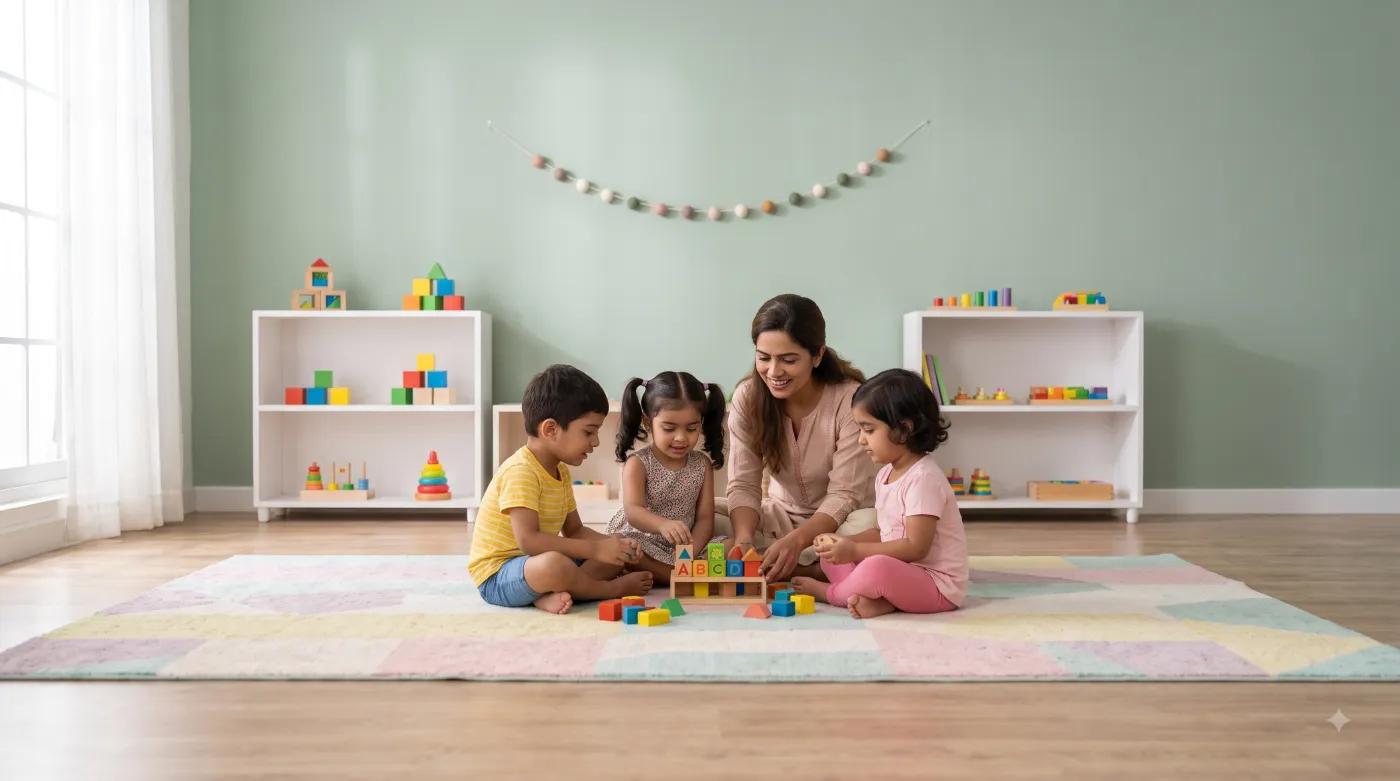
Namchi has established itself as a growing hub for early childhood education in South Sikkim, with 32 indexed preschools and kindergartens serving families across the city. The collective quality of these centers reflects a committed effort by educators and administrators to meet developmental standards, resulting in an average evaluation score of 88 out of 100. For parents navigating the options in Namchi, this score indicates that the majority of local centers provide structured early learning environments with trained staff and age-appropriate resources. The concentration of quality options makes Namchi a practical choice for families seeking reliable preschool placements without traveling to larger metropolitan areas.
Pre-Primary Learning Frameworks in Namchi
Montessori and Playway methodologies dominate the early education landscape in Namchi, and for good reason. The Montessori approach appeals to parents who value self-directed activity, mixed age groups, and hands-on learning materials. In Namchi's preschools, children work with tactile resources that build concentration and fine motor skills while developing independence at their own pace. This method works particularly well for toddlers who thrive when given freedom to explore within structured boundaries.
The Playway method complements this by emphasizing learning through games, songs, storytelling, and interactive activities. Namchi parents appreciate how Playway classrooms keep young children engaged through movement and social interaction, which aligns well with the developmental priorities of children aged two to five. Many local centers blend elements from both approaches, creating hybrid curricula that combine Montessori's structured independence with Playway's interactive energy. This flexibility allows teachers to adapt activities to individual children's needs rather than adhering rigidly to a single philosophy.
Neighborhood & Campus Infrastructure
Preschool facilities in Namchi spread across four main zones: North Hub, South Hub, East Zone, and West Zone. North Hub and South Hub contain the highest concentration of centers, with several options operating from dedicated school buildings rather than converted residential spaces. East Zone has seen steady growth in preschool availability over recent years, while West Zone serves families in more peripheral neighborhoods with fewer but still viable choices.
Fee structures in Namchi typically range from budget-friendly community preschools charging moderate monthly fees to premium centers with higher tuition that includes materials, meals, and extended hours. Campus standards vary considerably—established preschools in North Hub and South Hub often feature outdoor play areas, well-lit classrooms, and child-sized furniture, while newer centers in developing zones may still be expanding their physical infrastructure. Parents should visit potential centers personally to assess whether the learning environment meets their expectations for space, ventilation, and accessibility from their home location.
Safety & Operational Verification
Safety standards rank among the most thoroughly evaluated criteria when centers receive their operational scores. CCTV surveillance has become standard practice across Namchi's indexed preschools, with reputable centers maintaining camera coverage in classrooms, play areas, and entry points. Parents should confirm whether footage is monitored in real-time and how long recordings are retained.
Caregiver-to-child ratios directly impact the quality of supervision each child receives. Namchi's better-rated centers maintain ratios of approximately one teacher for every eight to ten children in toddler classrooms, dropping to one for every fifteen to twenty in pre-kindergarten groups. Lower ratios mean more individualized attention and quicker response times during emergencies or distress. Hygiene standards encompass clean restroom facilities, regular sanitization of toys and learning materials, proper food handling practices, and adequate ventilation throughout buildings. Parents are encouraged to request documentation of safety audits and observe classroom conditions during unannounced visits whenever possible.