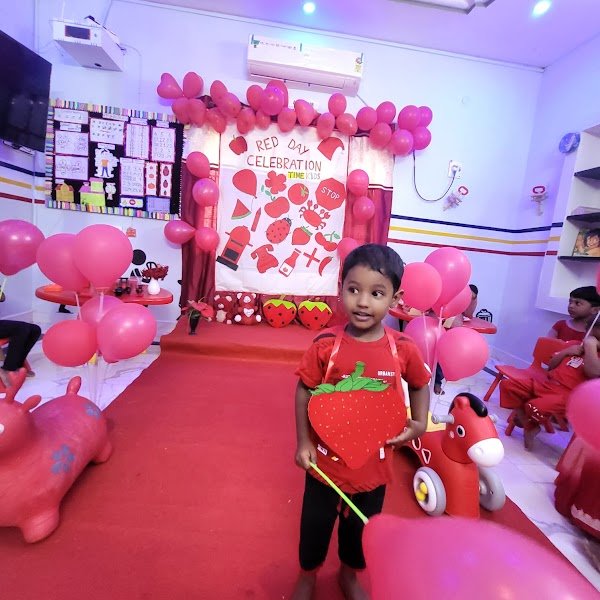
Parents in Vellore now have 19 indexed preschool and early education centers to consider for their children, reflecting steady growth in organized pre-primary options across the city. According to aggregated evaluation data, these centers maintain an average score of 88 out of 100, which signals generally strong standards in teaching methodology, infrastructure, and child welfare practices. For families navigating early education decisions, this concentration of options within a single municipal zone makes Vellore a practical market to compare without extensive travel between suburbs. Most centers fall within a comparable fee band, allowing parents to focus on pedagogical fit and operational quality rather than price disparity alone.
Pre-Primary Learning Frameworks in Vellore
Montessori and Playway together form the dominant curriculum mix across Vellore's indexed centers, and this pattern mirrors what local parents consistently report seeking. The Montessori method, with its emphasis on self-directed activity, tactile learning materials, and mixed-age group interaction, appeals to families who want their child to develop independence and concrete problem-solving skills from age two onward. Playway programs, by contrast, build foundational concepts through structured play, music, movement, and storytelling, which works well for children who thrive in activity-based, socially interactive settings.
- Montessori classrooms in Vellore typically use imported or locally manufactured sensorial materials, including pink towers, number rods, and sandpaper letters.
- Playway sessions often incorporate rhyme-based phonics, free-play corners, and weekly theme days that align with seasonal events in Tamil Nadu.
- Both frameworks keep formal academics out of the preschool years, focusing instead on motor coordination, language acquisition, and emotional regulation.
Parents weighing the two approaches should observe a live session at any shortlisted center. Children responding well to repetition and individual task completion often settle into Montessori quickly, while children who need more social stimulation and variety tend to adapt better to Playway structures.
Neighborhood & Campus Infrastructure
The Central Zone accounts for the majority of Vellore's 19 indexed preschools, which means most families are within a short commute of multiple options. This geographic concentration also drives competitive pricing, with annual fees generally ranging from modest mid-tier brackets to upper mid-tier levels depending on facility size and curriculum branding. When evaluating campus infrastructure, parents should look beyond the initial impression of a reception area and inspect the actual learning spaces.
- Check whether indoor activity rooms are adequately ventilated and separated from outdoor play zones.
- Confirm availability of child-height washrooms, drinking stations, and nap areas for full-day programs.
- Ask about teacher-to-student ratios, which should ideally not exceed 1:12 for three-year-olds and 1:15 for four- and five-year-olds.
Standard facility expectations in Vellore include CCTV-monitored entry points, fenced outdoor areas with shaded sections, and clearly marked emergency exits. Centers that score in the higher range of the 88-point average typically have these baseline features documented and visible during a tour.
Safety & Operational Verification
Evaluation of Vellore's preschools covers three operational pillars: physical security, caregiver adequacy, and hygiene compliance. CCTV coverage in classrooms and entry points is now standard across the indexed centers, and parents should request confirmation of live-monitoring access and footage retention policies. Caregiver verification includes background checks, early childhood training credentials, and first-aid certification, all of which contribute to a center's overall safety rating.
- Hygiene audits cover classroom cleaning frequency, toy sanitization cycles, and sick-child exclusion policies.
- Operational transparency includes clear fee breakdowns, pickup authorization protocols, and documented incident reporting procedures.
- Regular parent-teacher meetings and open-door observation policies signal a center's confidence in its day-to-day practices.
Before finalizing admission, parents should ask to review the most recent evaluation report, verify staff-to-child ratios during peak hours, and confirm emergency contact procedures. Centers scoring above the 88-point average have consistently met these verification standards, but a direct visit remains the most reliable way to confirm operational quality for your child.