Early Education in Jagtial: A Parent Guide
Jagtial, a growing municipal town in northern Telangana, has developed a structured pre-primary education ecosystem with 11 indexed centers serving local families. The average evaluation score across these facilities stands at 88 out of 100, reflecting solid operational standards in a market that remains accessible compared to Hyderabad's preschool sector. Most centers operate in the fee band of ₹25,000 to ₹55,000 per annum, positioning Jagtial as an affordable option for first-time parents seeking quality foundational learning without the premium pricing found in larger Telugu-speaking metros.
Parents in Jagtial typically begin their search between 18 and 30 months of age, with admission cycles aligning loosely with the June academic year. The town's compact layout means most families find suitable centers within a 3-kilometer radius of their residence. Walk-in consultations and campus visits are standard practice, and the relatively small number of providers allows parents to compare facilities directly rather than relying solely on online reviews.
Pre-Primary Learning Frameworks in Jagtial
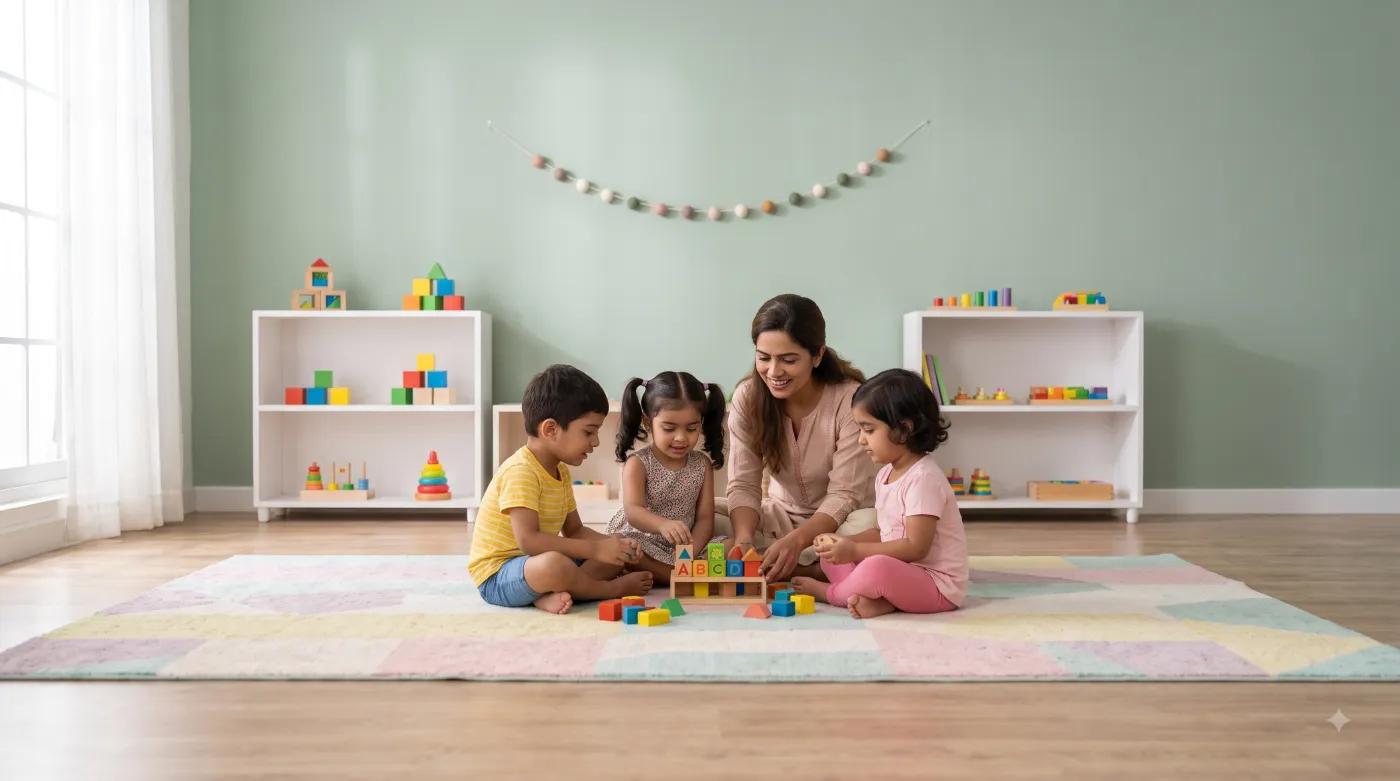
Montessori and Playway methodologies dominate the local landscape, appearing as the top-curriculum choices across the majority of indexed centers. The Montessori approach appeals to parents who value structured self-directed activity, hands-on learning materials, and mixed-age classroom interaction. Several centers in Jagtial have adopted authentic Montessori practices rather than diluted adaptations, which matters for parents who specifically want this framework for their child.
Playway methodology, rooted in learning through play, social interaction, and sensory exploration, suits families who prefer a less formal environment for children aged two to five. The method emphasizes outdoor activity, storytelling, music, and group play. In Jagtial's climate and community structure, Playway programs often integrate Telugu-medium storytelling alongside English vocabulary building, giving children bilingual exposure from an early stage.
Beyond these two dominant frameworks, some centers offer hybrid models that combine elements of Montessori with play-based learning. Parents should ask prospective schools about teacher certification, material authenticity, and daily activity schedules to determine whether a center genuinely follows its stated methodology or simply labels itself accordingly.
Neighborhood and Campus Infrastructure
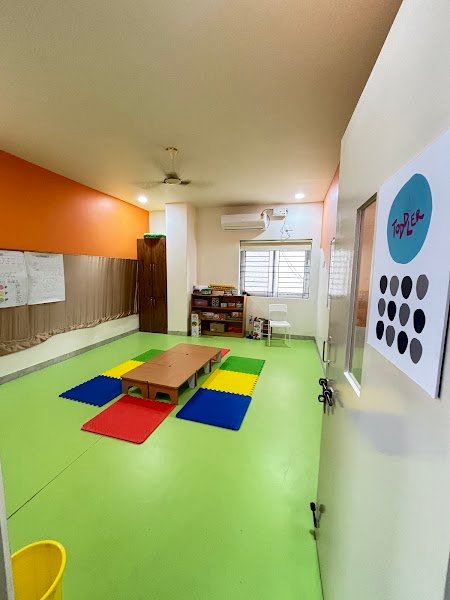
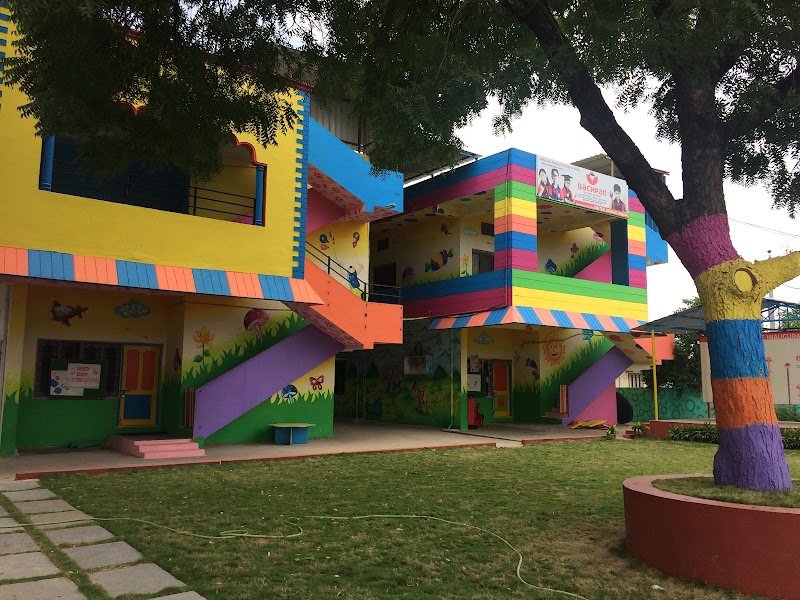
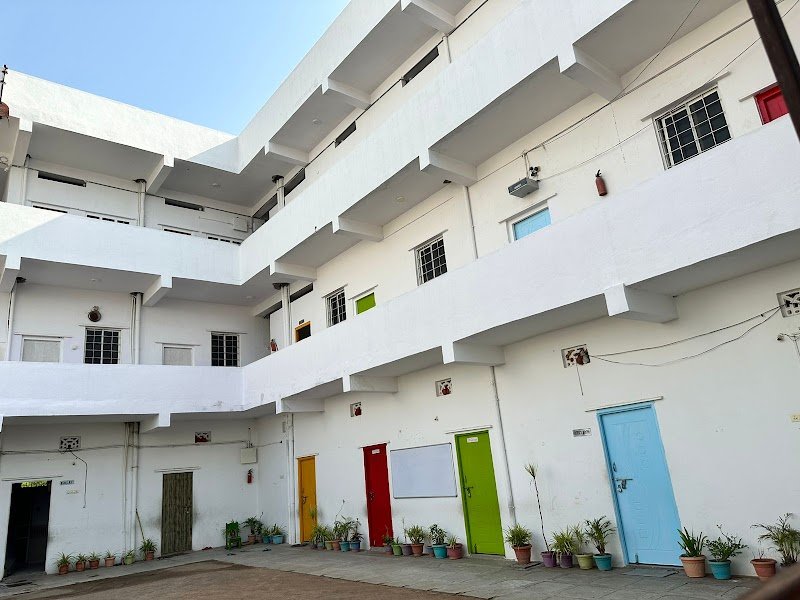
Preschool distribution in Jagtial concentrates across three major neighborhoods: Mootapally, Chittapur, and Davanpally. Mootapally hosts several mid-sized centers with dedicated play areas, while Chittapur features a mix of standalone buildings and converted residential spaces. Davanpally has seen recent growth in newer facilities, some of which include purpose-built infrastructure rather than retrofitted structures.
Fee structures vary noticeably by location and facility quality. Entry-level centers in semi-converted buildings charge between ₹20,000 and ₹30,000 annually. Mid-tier facilities with proper classrooms, trained staff, and defined activity zones typically range from ₹35,000 to ₹45,000. Premium centers with extended daycare, structured curricula, and larger campuses can reach ₹50,000 to ₹70,000 per year. Transport facilities add ₹5,000 to ₹12,000 depending on distance and vehicle type.
Class sizes in most indexed centers range from 15 to 25 students per section, with separate sections typically maintained for nursery, LKG, and UKG levels. Parents should verify whether centers maintain adequate teacher-to-student ratios, ideally one caregiver per 12 to 15 children in the pre-primary stage.
Safety and Operational Verification
Evaluation of Jagtial's preschools focuses on three primary criteria: CCTV coverage, caregiver qualifications, and hygiene protocols. The 88/100 average score indicates that most centers meet baseline expectations across these categories, though meaningful variation exists between individual facilities.
CCTV monitoring has become standard in indexed centers, with most maintaining camera coverage in classrooms, entry points, and outdoor play zones. Parents should ask whether footage is retained for a reasonable period and whether live monitoring is available for administrators. Fire safety equipment, first-aid kits, and child-proofed furniture are also evaluated during facility assessments.
Caregiver verification includes background checks, minimum qualification standards (typically NTT or D.El.Ed for lead teachers), and staff-to-child ratio compliance. Hygiene standards cover drinking water safety, washroom cleanliness, food preparation areas if meals are provided, and daily sanitization routines. Parents visiting a center should observe these elements firsthand and request documentation of staff credentials before finalizing admission.



.webp)
.webp)