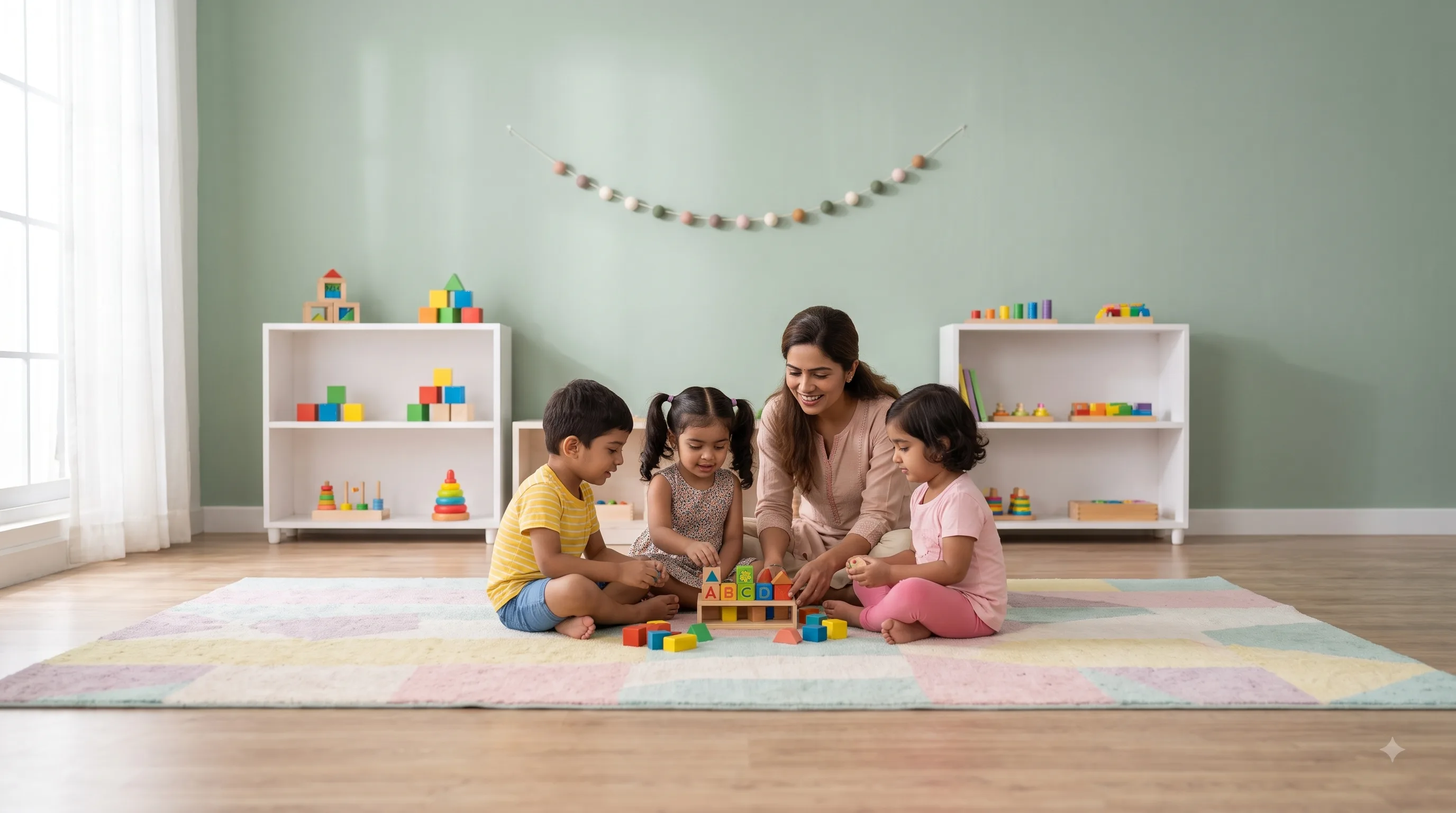
Kalvacherla, a developing locality in Andhra Pradesh, currently hosts 1 indexed early education center serving the community's preschool needs. With an average evaluation score of 88 out of 100, the available preschool infrastructure demonstrates a solid commitment to foundational learning standards. Parents in this region have access to quality early education options, though the single-center availability means families often need to plan ahead regarding admissions and waitlists. The strong evaluation score reflects positively on operational practices, safety protocols, and pedagogical quality within the existing facility, providing reassurance to parents seeking reliable preschool placements for their children.
Pre-Primary Learning Frameworks in Kalvacherla
Montessori and Playway methodologies dominate the early education landscape in Kalvacherla, and local parents gravitate toward these approaches for several practical reasons. The Montessori method emphasizes self-directed activity, hands-on learning materials, and mixed-age classrooms that encourage peer learning and independence. This framework suits children between 2.5 and 6 years, helping them develop concentration, coordination, and problem-solving skills at their own pace. Playway methodology, on the other hand, integrates structured play with foundational concepts in language, numeracy, and social skills, making it particularly effective for younger children transitioning from home environments to formal learning settings.
Both approaches prioritize experiential learning over rote memorization, which aligns with contemporary research on early childhood cognitive development. Parents in Kalvacherla appreciate how these methods reduce academic pressure during formative years while still preparing children for primary school readiness. The combined availability of both frameworks in a single locality offers families meaningful choice based on their child's temperament and learning style.
Neighborhood & Campus Infrastructure
Centenary Colony serves as the primary residential pocket where preschool facilities are concentrated in Kalvacherla. This neighborhood layout offers convenience for families living within walking distance, though residents from surrounding areas may need to arrange transportation. Fee structures in this locality typically fall within mid-range bands common to semi-urban Andhra Pradesh, making quality early education accessible to middle-income households without the premium pricing found in larger metropolitan areas.
Facility standards in Centenary Colony preschools generally include dedicated activity rooms, outdoor play areas, age-appropriate learning materials, and child-safe furniture. Classroom sizes tend to remain manageable due to the smaller community scale, allowing for more individualized attention. Infrastructure investments in these centers focus on creating stimulating environments with sensory corners, reading nooks, and motor skill development zones that support well-rounded growth during the preschool years.
Safety & Operational Verification
Preschool evaluation in Kalvacherla follows systematic assessment protocols covering three critical operational areas. CCTV monitoring forms the backbone of security infrastructure, with cameras typically installed at entry points, classrooms, and play areas to ensure continuous supervision and child protection. Caregiver-to-child ratios are scrutinized during evaluations, with standards requiring adequate adult presence to maintain attentive supervision during all activities, meals, and rest periods.
Hygiene standards receive equal weight in the assessment process, including sanitation of toys and equipment, clean restroom facilities, safe drinking water access, and proper food handling practices in centers providing meals. The 88 out of 100 average evaluation score achieved by Kalvacherla's indexed center indicates consistent compliance with these operational benchmarks, though prospective parents should always conduct personal visits to verify current conditions, interact with staff, and assess whether the specific environment matches their child's needs before finalizing enrollment decisions.