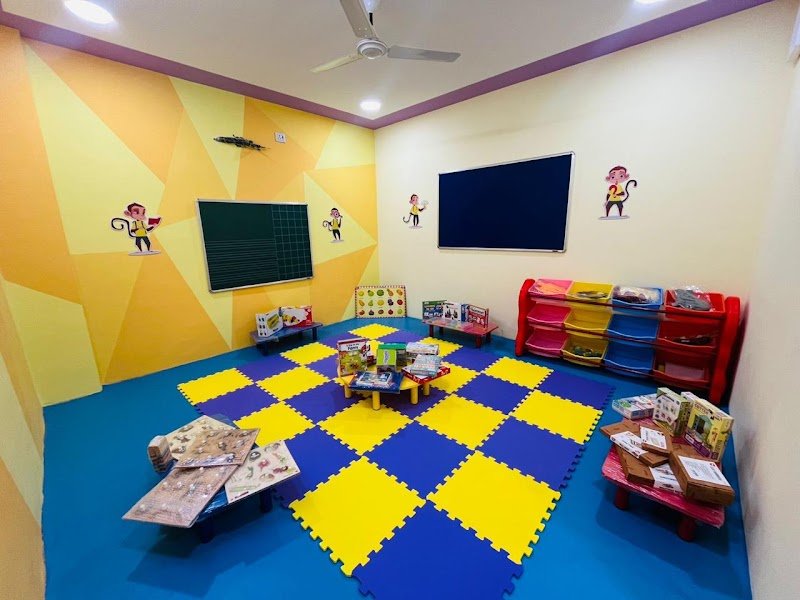
Choosing the right early childhood provider in Manneguda requires looking past generic marketing claims to examine actual operational data. Currently, our index tracks one primary preschool and daycare center in this Telangana locality, which holds an average evaluation score of 88/100. This high score reflects a facility that meets rigorous standards for curriculum implementation, staff competency, and physical safety. For parents in Manneguda, this limited but high-quality option suggests a tight-knit educational environment where personalized attention is easier to maintain than in larger, more fragmented urban districts. The data indicates that local providers are prioritizing structured developmental frameworks over casual play, ensuring that children receive consistent academic and social foundations before entering formal school.
Pre-Primary Learning Frameworks in Manneguda
The dominant pedagogical approaches in this area are Montessori and Playway, both of which have gained significant traction among progressive parents in Telangana. Montessori education emphasizes child-led learning through hands-on materials, allowing children to direct their own educational journey within a prepared environment. In Manneguda, this approach helps develop independence and concentration, skills that are often difficult to cultivate in traditional classroom settings. Playway, on the other hand, offers a structured, activity-based curriculum that blends academic concepts with creative play. This method is particularly effective for early learners who may struggle with abstract concepts, as it grounds learning in tangible experiences. The combination of these two frameworks suggests that the local center is likely designed to accommodate diverse learning styles, providing a balance between self-directed exploration and guided instruction. This dual focus ensures that children build both cognitive skills and social confidence, preparing them for the more rigid structures of primary schooling.
Neighborhood & Campus Infrastructure
The primary service area for these educational centers is Durganjanadri Colony, a residential neighborhood that benefits from the proximity of the indexed facility. With only one major center, the infrastructure is likely concentrated in a well-equipped campus designed to serve the immediate community. Fee bands in this segment generally align with mid-range urban standards, reflecting the quality of the curriculum and staff qualifications. Parents can expect facilities that include dedicated play areas, reading corners, and secure entry points. The physical layout is typically designed to minimize transitions between indoor and outdoor activities, ensuring that children remain engaged throughout the day. The focus on Durganjanadri Colony highlights a localized approach to education, where the center acts as a community hub for early learning. This concentration allows for better resource management and more consistent service delivery, as the staff can build deeper relationships with the local families and understand specific community needs.
Safety & Operational Verification
An evaluation score of 88/100 is not awarded lightly; it is the result of a thorough audit of safety and operational protocols. Centers in Manneguda are assessed on the presence and functionality of CCTV security systems, which must cover all public and private areas without blind spots. Caregiver ratios are strictly monitored to ensure that every child receives adequate supervision and individualized attention, a critical factor in preventing accidents and promoting positive social interactions. Hygiene standards are also a major component of the scoring, with emphasis on regular sanitization of play materials, proper sanitation facilities, and food safety protocols. These checks ensure that the environment is not only educational but also physically safe and healthy. For parents, this verification process provides a clear benchmark for quality, allowing them to make informed decisions based on verifiable data rather than reputation alone. The transparency of these evaluations helps build trust between the educational provider and the local community.