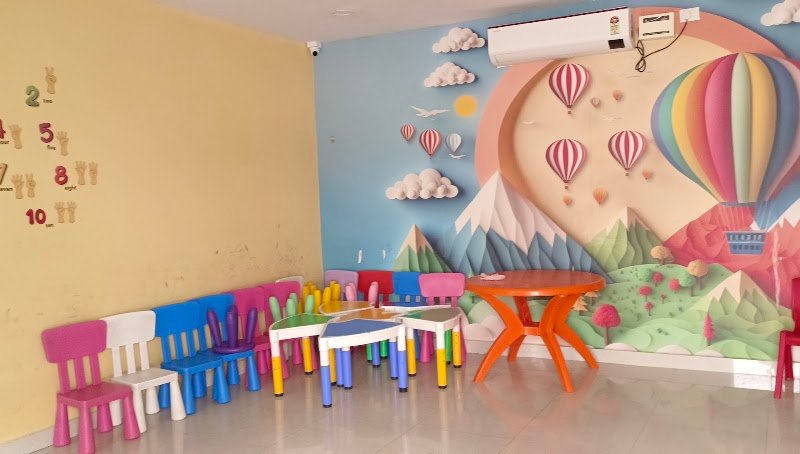
Early Education Landscape in Nalgonda
Nalgonda has 34 indexed preschools serving families across the district, reflecting a steady expansion of structured early learning options beyond the traditional home environment. The average evaluation score across these centers stands at 88 out of 100, which signals a generally consistent baseline of quality. Parents looking for pre-primary education here have moved well past the question of whether to enroll, and now focus on matching curriculum philosophy with their child's temperament. Most centers operate within residential colonies of the town, making daily drop-offs manageable for working households commuting toward Hyderabad or operating within local government and agricultural sectors.
Pre-Primary Learning Frameworks in Nalgonda
Montessori and Playway remain the two dominant curricular choices in Nalgonda, and for good reason. Montessori classrooms across the town emphasize self-directed activity, mixed-age groupings, and tactile learning materials that suit children between 2 and 6 years. Parents in Shivaram Nagar and Kanagal particularly favor this method because it builds concentration and independence at an early age, two skills that align with the academic expectations children face when they transition into local CBSE and state board schools.
Playway methodology takes a different approach, using play-based activities to introduce language, numeracy, and social concepts. This framework tends to attract families in Gudipalli and Kasthala where parents want their children to spend the preschool years developing confidence and communication before formal reading and writing begin. Both approaches share a common strength: they prepare children for structured schooling without forcing early academics, which is a balance that resonates with most households in the district.
Neighborhood and Campus Infrastructure
Preschool distribution across Nalgonda spans five major neighborhoods. Shivaram Nagar and Kanagal host the highest concentration of established centers, given their proximity to residential colonies and main arterial roads. Gudipalli and Koppole have emerging options, often run by first-generation entrepreneurs converting residential plots into early learning spaces. Kasthala offers fewer centers but tends to feature campuses with larger outdoor areas, a practical advantage for schools following Montessori models that require outdoor sensorial work.
Fee bands vary significantly by neighborhood. Centers in Shivaram Nagar charge a premium ranging from moderate to higher fees, justified by better infrastructure including air-conditioned classrooms, dedicated activity rooms, and transport fleets. Kanagal and Koppole preschools fall into the mid-range, balancing affordability with adequate facilities. Kasthala and Gudipalli typically offer more economical options, though parents should verify whether the lower fee reflects reduced staffing or simply lower overhead from family-run operations.
Safety and Operational Verification
Every indexed center in Nalgonda is evaluated on three operational pillars. CCTV coverage is the first checkpoint; classrooms, entry points, and outdoor play zones should have functioning cameras with monitored access. The second pillar is caregiver-to-child ratio. For toddlers aged 1.5 to 2.5 years, a ratio of 1:10 or lower is acceptable, while pre-primary groups aged 3 to 5 years should maintain 1:15 or better. Ratios above these thresholds often indicate stretched staff, which directly affects individual attention.
Hygiene standards form the third verification layer. Evaluators check washroom cleanliness, drinking water filtration, food preparation areas for centers offering mid-day meals, and sanitization routines during the day. The 88 out of 100 average score across Nalgonda's 34 centers suggests these three pillars are generally met, though individual scores vary. Parents should request the specific evaluation breakdown for any center under consideration, particularly regarding staff qualifications, emergency protocols, and whether the school maintains updated fire safety equipment. A score above 85 indicates reliable operations, while anything below 80 warrants closer inspection before enrollment.