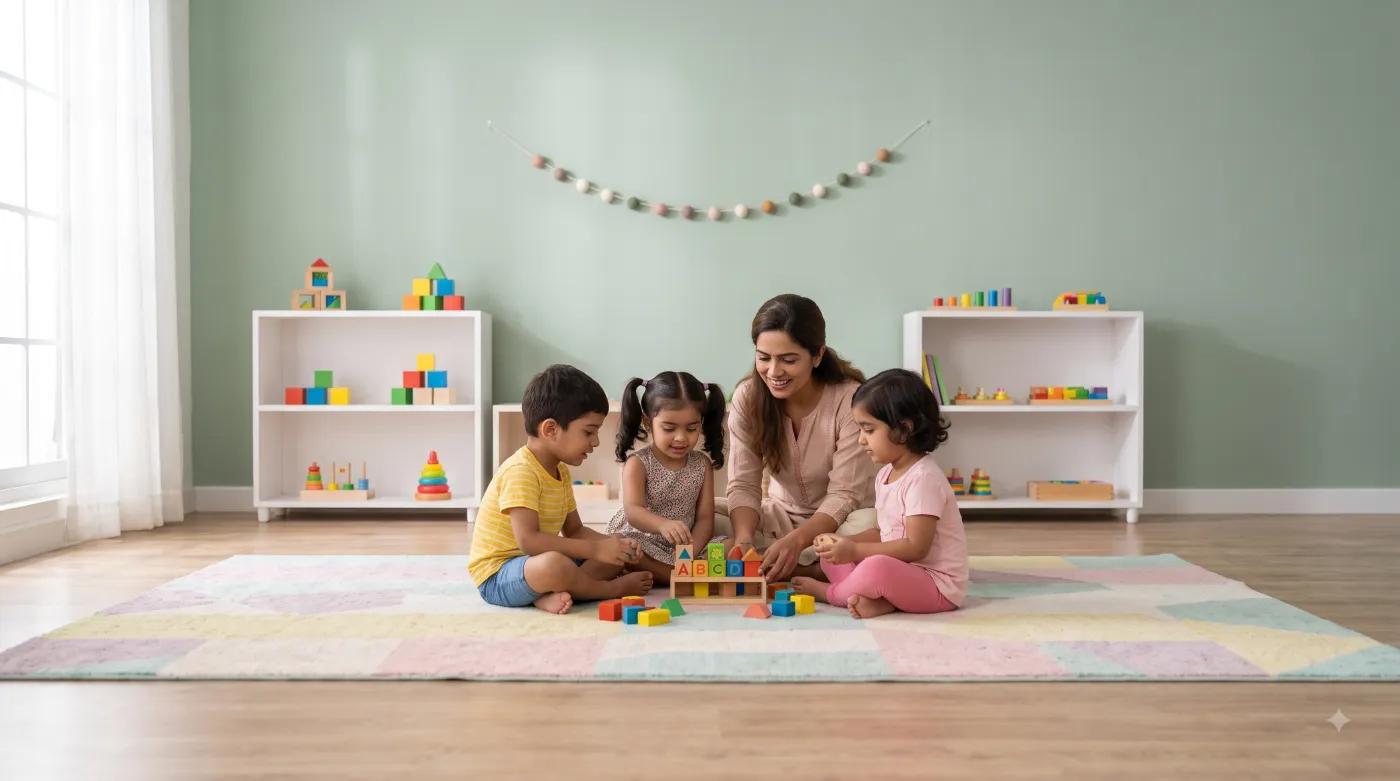
Wardhannapet’s early‑learning scene is growing quickly, with 22 indexed preschools and daycares serving families across the town. An average evaluation score of 88 / 100 shows that most centers meet high standards for curriculum, safety, and overall quality. Parents can expect a solid mix of modern teaching methods and reliable facilities, making it easier to find a setting that matches both educational goals and practical needs.
Pre‑Primary Learning Frameworks in Wardhannapet
Montessori and Playway dominate the local curriculum landscape. Both approaches focus on hands‑on learning, encouraging children to explore concepts at their own pace.
- Montessori: Emphasizes self‑directed activity, mixed‑age groups, and a prepared environment that nurtures independence. Parents appreciate the clear progress markers and the way it builds confidence in everyday tasks.
- Playway: Uses structured play to introduce basic literacy, numeracy, and social skills. The method aligns well with the cultural emphasis on community interaction, helping children develop communication abilities early.
Choosing between them often depends on a child’s temperament. Montessori suits kids who enjoy focused, quiet work, while Playway fits those who thrive on active, group‑based activities. Both curricula are supported by trained teachers who adapt lessons to local languages and customs, ensuring relevance to Wardhannapet families.
Neighborhood & Campus Infrastructure
Preschool locations cluster in three main zones, giving parents options close to home or work.
- Central Zone: Hosts 9 centers, many of which are near main markets and public transport hubs. Fees here range from ₹4,500 to ₹7,000 per month, reflecting higher demand and often newer facilities.
- West Zone: Contains 7 centers, offering a mix of mid‑range and budget‑friendly options (₹3,800–₹6,200). Several campuses feature small gardens and multipurpose rooms that double as community spaces.
- South Hub: Home to 6 centers, primarily focused on affordable care (₹3,500–₹5,500). Many of these centers share space with local schools, providing easy transition for children moving to primary grades.
Across all zones, most campuses meet basic infrastructure standards: child‑sized furniture, secure entry points, and clean play areas. A growing number of centers are adding outdoor learning zones, which align with the region’s pleasant climate and give children more space for physical activity.
Safety & Operational Verification
Safety checks are a key part of the evaluation process. Each center is scored on three main criteria:
- CCTV Coverage: At least 80 % of indoor and outdoor areas are monitored, with footage stored for a minimum of 30 days.
- Caregiver‑to‑Child Ratios: Ratios do not exceed 1:6 for children under three and 1:8 for ages three to five, ensuring attentive supervision.
- Hygiene Standards: Daily cleaning logs, regular hand‑washing schedules, and routine health inspections are required. Centers must also have a clear protocol for managing minor injuries and illnesses.
Parents can request a copy of a center’s latest evaluation report, which includes detailed scores for each of these areas. Visiting a campus during operating hours gives a practical sense of how staff interact with children and maintain the environment. When all three safety components score well, families can feel confident that their child’s day will be both enriching and secure.