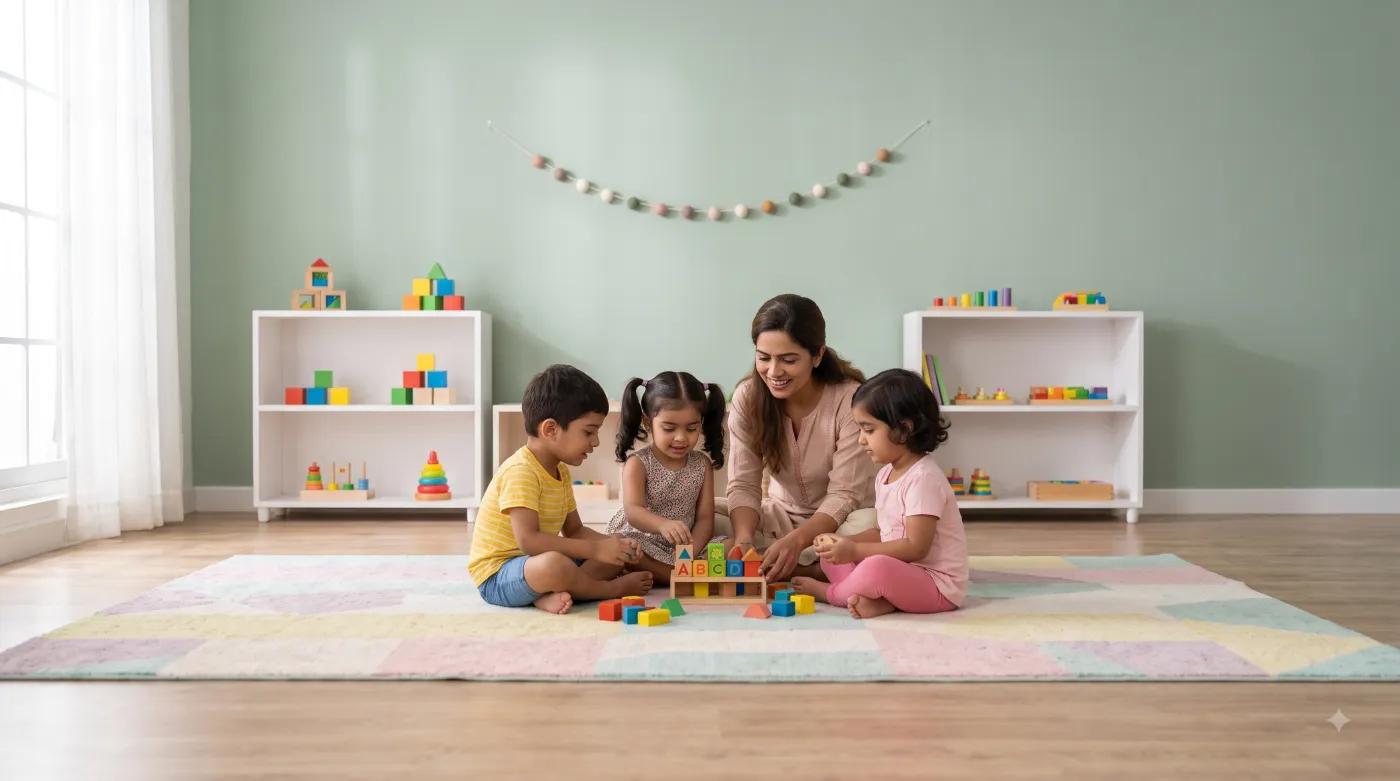
Delhi’s early‑education landscape is extensive, with 692 indexed preschools serving families across the city. The average evaluation score of these centers stands at 88 / 100, indicating a generally high level of quality in teaching, facilities, and overall child safety. Parents can feel confident that a wide range of options are available, from small community‑run schools to larger chains, each measured against a common set of standards.
Pre‑Primary Learning Frameworks in Delhi
Montessori and Playway dominate the curriculum choices for Delhi’s youngest learners. Both approaches emphasize hands‑on activity, allowing children to explore concepts at their own pace. Montessori classrooms are set up with self‑correcting materials that encourage independence, while Playway integrates movement, music, and storytelling to build social skills. Local parents appreciate that these methods develop problem‑solving abilities early, reduce reliance on rote memorization, and align with the city’s competitive academic environment. The result is a smoother transition to primary school, where children are already comfortable with group work and basic literacy‑numeracy concepts.
Neighborhood & Campus Infrastructure
Preschool locations reflect Delhi’s diverse neighborhoods. In bustling Sadar Bazaar and Sabzi Mandi Old, many centers are housed in renovated shop‑fronts, offering affordable fee bands that start around ₹4,500 per month. Rohini’s newer residential zones host larger campuses with playgrounds and indoor activity rooms, where fees typically range from ₹7,000 to ₹12,000. Chandni Chowk’s historic area features a mix of heritage buildings and modern facilities, with mid‑range fees of ₹6,000‑₹9,000. Karol Bagh, a commercial hub, includes several high‑end centers that provide extended hours and enrichment programs, charging up to ₹15,000 monthly.
- Sadar Bazaar & Sabzi Mandi Old: Compact spaces, strong community ties, low‑to‑mid fees.
- Rohini: Spacious grounds, playgrounds, higher fee range, focus on extracurriculars.
- Chandni Chowk: Blend of old‑world charm and updated classrooms, moderate fees.
- Karol Bagh: Premium facilities, extended services, top‑tier fees.
All centers are required to meet basic infrastructure standards, including child‑size furniture, safe play equipment, and clear evacuation routes. Many schools also provide parent‑teacher communication apps, allowing daily updates on attendance and activities.
Safety & Operational Verification
Safety checks are a core part of the evaluation process. Every listed preschool must demonstrate functional CCTV coverage in classrooms, entry points, and outdoor areas. Caregiver‑to‑child ratios are strictly monitored; the norm is one adult for every 6‑8 children in the 2‑3 year group and one for every 8‑10 in the 4‑5 year group. Hygiene standards include daily cleaning schedules, separate sanitation stations for toddlers, and regular health inspections. Parents are encouraged to visit a center during peak hours to observe how staff manage transitions, snack times, and emergency drills. Documentation such as fire‑safety certificates, staff background checks, and first‑aid training records should be readily available for review.